

As a trusted supplier of low profile sow moulds, I often encounter inquiries from clients regarding the maximum temperature these moulds can withstand. Understanding this critical aspect is essential for ensuring the efficiency and longevity of the casting process. In this blog, I will delve into the factors that determine the maximum temperature tolerance of low profile sow moulds, and provide some insights based on our experience in the industry.
Factors Affecting Temperature Tolerance
Material Composition
The material used in the construction of low profile sow moulds plays a pivotal role in determining their temperature resistance. Most commonly, these moulds are made from high - quality cast iron or steel alloys. Cast iron is known for its excellent heat retention and distribution properties. It can generally withstand temperatures up to around 700 - 900°C. The graphite structure in cast iron provides some flexibility, which helps it to resist thermal shock to a certain extent.
Steel alloys, on the other hand, offer even higher temperature resistance. Depending on the specific alloy composition, steel moulds can withstand temperatures well above 1000°C. Alloys containing elements such as chromium, nickel, and molybdenum enhance the strength and heat resistance of the steel. For example, stainless steel alloys with high chromium content can maintain their structural integrity at elevated temperatures and are less prone to oxidation.
Design and Thickness
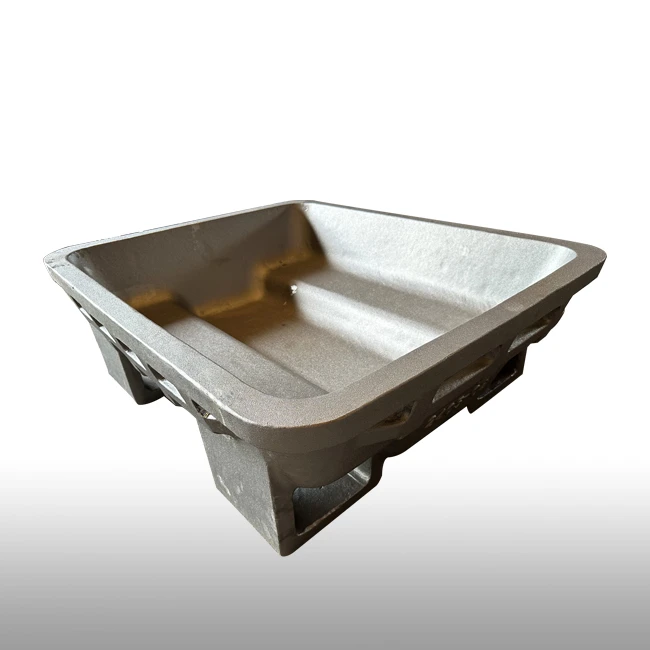
The design of the low profile sow mould also impacts its temperature tolerance. A well - designed mould with proper heat dissipation channels can handle higher temperatures more effectively. For instance, moulds with fins or ribs on the outer surface increase the surface area available for heat transfer, allowing the mould to cool down faster.
The thickness of the mould walls is another crucial factor. Thicker walls can absorb and distribute heat more evenly, reducing the risk of local overheating. However, overly thick walls may also lead to longer cooling times, which can affect the productivity of the casting process. Therefore, a balance must be struck between wall thickness and heat transfer efficiency.
Coating and Surface Treatment
Applying a suitable coating to the inner surface of the low profile sow mould can significantly improve its temperature resistance. Coatings act as a barrier between the molten metal and the mould material, reducing the direct contact and heat transfer. Ceramic coatings, for example, have excellent thermal insulation properties and can withstand extremely high temperatures. They also prevent the adhesion of the molten metal to the mould surface, making it easier to remove the solidified ingot.
Surface treatments such as nitriding or carburizing can enhance the hardness and heat resistance of the mould surface. These treatments create a hardened layer on the surface of the mould, which can better withstand the abrasive and thermal stresses during the casting process.
Typical Temperature Ranges for Low Profile Sow Moulds
Based on our experience as a supplier, low profile sow moulds made from cast iron typically have a maximum temperature tolerance in the range of 700 - 900°C. These moulds are suitable for casting metals with relatively low melting points, such as some aluminum alloys. Aluminum has a melting point of around 660°C, and cast iron moulds can easily handle the heat generated during the casting of aluminum sow ingots.
For more demanding applications, such as casting metals with higher melting points like copper (melting point around 1085°C) or some high - temperature steel alloys, steel moulds are the preferred choice. Steel low profile sow moulds can withstand temperatures ranging from 1000 - 1300°C, depending on the specific alloy and treatment.

Case Studies and Real - World Applications
Let's take a look at some real - world applications to understand how temperature tolerance affects the performance of low profile sow moulds. In an aluminum production plant, they were using cast iron low profile sow moulds to cast aluminum ingots. The melting temperature of the aluminum was around 700°C, which was well within the temperature tolerance of the cast iron moulds. The moulds were able to produce high - quality ingots consistently, with minimal wear and tear over time.
However, when a client wanted to cast a special copper - based alloy with a melting point of around 1100°C, they initially tried using the same cast iron moulds. The result was a significant reduction in the lifespan of the moulds due to overheating and thermal cracking. After switching to steel low profile sow moulds, the problem was resolved. The steel moulds were able to withstand the high temperatures and produced defect - free copper alloy ingots.
Our Product Range
We offer a wide range of low profile sow moulds to meet the diverse needs of our clients. Our 2000lbs High Profile Sow Mold With Forklift Pocket is designed for high - volume production. It is made from high - quality steel alloy, which can withstand high temperatures and is equipped with forklift pockets for easy handling.
Our 7 - 9kgs Small Ingot Molds are ideal for small - scale casting operations. These moulds are available in both cast iron and steel options, allowing clients to choose based on their specific temperature requirements.
For clients looking for a unique design, our T - type Ingot Sow Mold offers a distinctive shape for the ingots. The T - type design can improve the stacking and handling efficiency of the ingots, and it is also available in different materials to suit various temperature conditions.
Conclusion
In conclusion, the maximum temperature that low profile sow moulds can withstand depends on several factors, including material composition, design, thickness, and surface treatment. By understanding these factors, clients can make informed decisions when choosing the appropriate moulds for their casting operations.
If you are in the market for high - quality low profile sow moulds, we are here to assist you. Our team of experts can help you select the right mould based on your specific temperature requirements and production needs. Contact us today to start a discussion about your procurement requirements, and let us work together to find the best solution for your casting process.
References
- Callister, W. D., & Rethwisch, D. G. (2011). Materials Science and Engineering: An Introduction. Wiley.
- ASM Handbook Committee. (1990). ASM Handbook Volume 15: Casting. ASM International.