

Understanding Dross in Aluminum Ingot Production
Before delving into the specific role of dross pans and molds, it is essential to have a clear understanding of what dross is and why it forms during aluminum ingot production.
Dross is a common term used to describe the solid layer of impurities and oxides that floats on the surface of molten aluminum during the casting process. The formation of dross is primarily attributed to the chemical reactions between aluminum and oxygen in the atmosphere, as well as impurities present in the raw aluminum scrap.
The main components of dross include:
1. Aluminum Oxides: These are formed when aluminum reacts with atmospheric oxygen. Oxides are a major component of dross and contribute to the layer's density and thickness.
2. Alloying Elements: Aluminum alloys often contain elements like silicon, copper, and magnesium. During melting and casting, these elements can form intermetallic compounds that become part of the dross.
3. Inorganic Impurities: Tramp elements such as iron, zinc, and others can also be present in aluminum scrap. These impurities can oxidize and become part of the dross layer.
Dross is problematic for several reasons:
Reduced Yield: Dross consumes valuable aluminum, resulting in a lower yield of usable ingots.
Quality Issues: The presence of dross can lead to defects in ingots, such as surface imperfections and reduced mechanical properties.
Energy Consumption: Removing dross requires additional energy, which increases production costs.
Environmental Concerns: Disposing of dross can pose environmental challenges, as it contains impurities that may be hazardous.
To address these issues, aluminum ingot manufacturers employ various methods and equipment, including dross pans and molds.
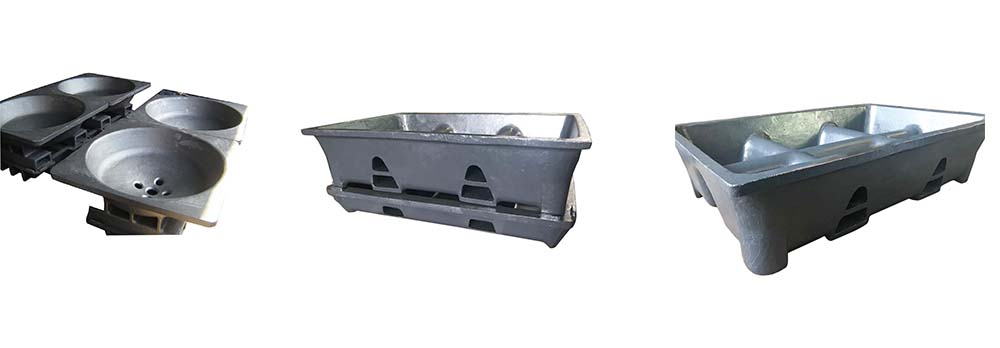
The Role of Dross Pans in Aluminum Ingot Production
Dross pans, also known as dross boxes or skim pans, are essential components in aluminum foundries and smelting facilities. Their primary purpose is to efficiently remove dross from the surface of the molten aluminum during the casting process. Here's how dross pans work and their critical functions:
●Dross Skimming: Dross pans are positioned at the top of the molten aluminum bath. As dross forms on the surface, it is pushed toward the dross pan using various mechanical or hydraulic mechanisms.
●Collection and Separation: Dross pans are designed to collect the dross and separate it from the molten aluminum. Some pans have special features like inclined sides or weirs that assist in this separation process.
●Storage and Removal: Once collected, the dross is stored within the dross pan until it can be removed safely. Some pans have lids or covers to prevent re-oxidation of the dross.
●Minimizing Reoxidation: Dross pans are often equipped with inert gas injection systems to create a protective atmosphere above the molten aluminum, minimizing reoxidation during dross removal.
●Continuous Operation: Dross pans are typically designed for continuous operation, allowing for the efficient removal of dross throughout the casting process.
Benefits of Dross Pans:
◆Improved Yield: Dross pans help recover valuable aluminum that would otherwise be lost in the dross, increasing the overall yield of usable ingots.
◆Enhanced Quality: By removing dross from the molten aluminum, dross pans contribute to the production of ingots with better surface finish and mechanical properties.
◆Energy Savings: The removal of dross reduces the need for post-casting processing, resulting in energy savings and cost reduction.
Environmental Benefits: Effective dross removal minimizes the environmental impact of dross disposal, as the recovered aluminum can be recycled.
The Importance of Molds in Aluminum Ingot Production
In addition to dross pans, molds are crucial components in the production of aluminum ingots. Molds are responsible for shaping the molten aluminum into the desired ingot form. Here's an overview of their role and significance:
◆Shaping the Ingot: Molds are used to give the molten aluminum its final ingot shape. They come in various sizes and designs to accommodate different ingot specifications, such as size, weight, and shape.
◆Cooling and Solidification: Molds facilitate the controlled cooling and solidification of the molten aluminum. This controlled process helps ensure that the ingots have uniform properties and meet quality standards.
◆Preventing Distortion: Properly designed and maintained molds prevent ingot distortion and cracking during the cooling process, which can lead to defects in the final product.
◆Surface Finish: Molds play a role in determining the surface finish of the ingot. Well-maintained molds with appropriate coatings or treatments can produce ingots with smooth and clean surfaces.
◆Release Mechanisms: Molds are equipped with release mechanisms that allow for the easy removal of solidified ingots without damage.
Benefits of Molds:
Consistency: Molds contribute to the production of consistent and uniform ingots, ensuring product quality and performance.
Efficiency: Well-designed molds optimize the cooling and solidification process, reducing production cycle times.
Quality Control: Molds provide a level of control over the ingot's final dimensions and surface finish, allowing for greater quality assurance.
Customization: Molds can be tailored to produce ingots of various sizes and shapes, meeting the specific needs of customers and industries.
Reduced Waste: Properly designed molds minimize the occurrence of rejects and waste, leading to cost savings and improved sustainability.
The Synergy of Dross Pans and Molds
While dross pans and molds serve distinct functions in the aluminum ingot production process, they are interconnected in their impact on product quality and efficiency. Here's how these two components work together to optimize the production of high-quality aluminum ingots:
◎Dross Removal Before Casting: Dross pans efficiently remove dross from the molten aluminum before it is poured into molds. This ensures that the ingots are cast with a lower level of impurities and oxides, resulting in superior surface finish and mechanical properties.
◎Mold Compatibility: Molds must be compatible with dross pan systems to allow for seamless dross removal and ingot casting. This compatibility ensures that the dross removal process does not disrupt the casting operation.
◎Cooling and Solidification Control: Molds play a critical role in controlling the cooling and solidification of the molten aluminum. This control is essential for preventing the formation of internal defects that can result from rapid or uneven cooling.
◎Quality Assurance: The combination of effective dross removal and precise ingot shaping provided by molds enhances quality assurance throughout the production process. This results in ingots that meet or exceed industry standards.
Contact us
86 029 87607185 86029 87669660 86 029 87607180 ext. 8003
Email: Tech@huan-tai.org
Address:No.68, 2nd Keji Road Xian, China 710075