

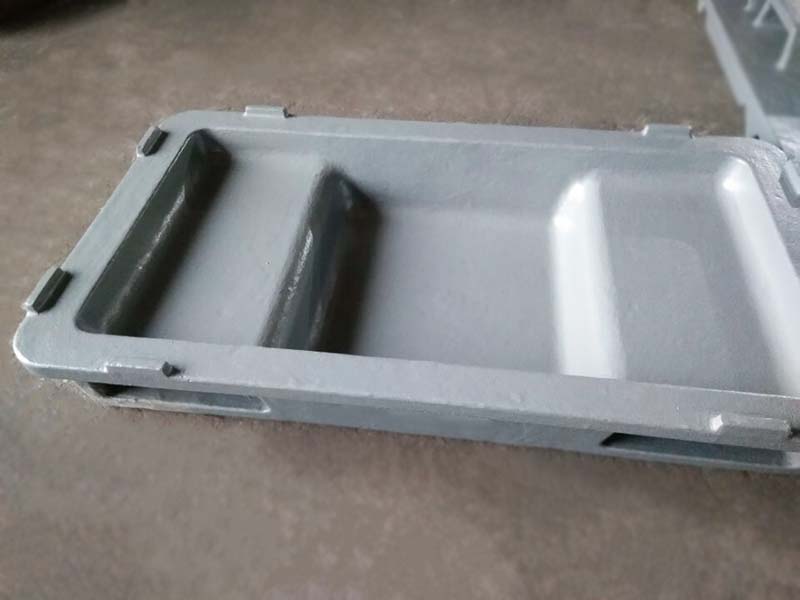
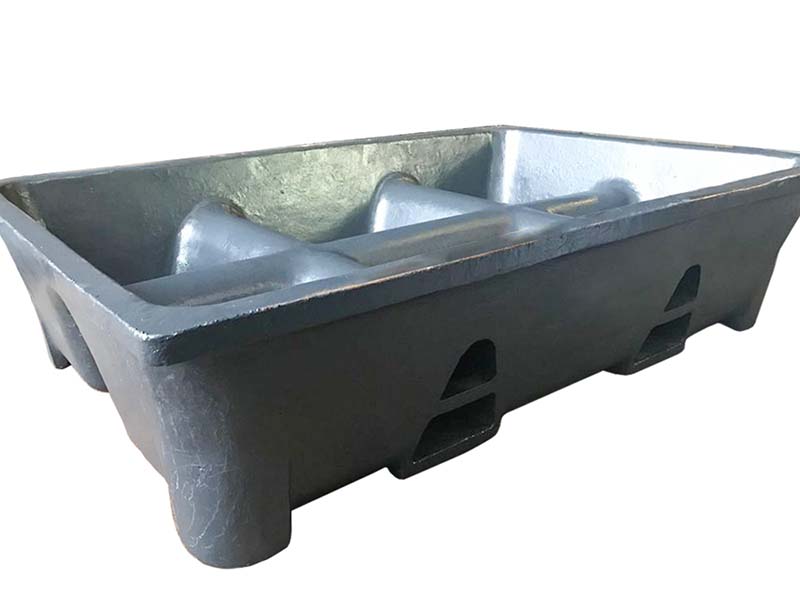
The unique design of the aluminum sow mold allows the molten ingot metal to cool and solidified at an efficient cooling rate, preventing the metal from oxidizing too quickly to increase productivity. The bottom of the sow mold is also equipped with a forklift port, which is convenient for forklift trucks to carry out handling, thus solving the difficulties of the foundry.
1. Aluminum Sand Molds
sand molds are the most commonly used molds in aluminum casting. They are made of a mixture of silica sand, clay, and water, which gives them their green color. Green sand molds are relatively inexpensive and easy to make, making them a popular choice for small-scale production. They also have good dimensional accuracy and can be reused multiple times. However, they have a limited lifespan and can only be used for low to medium volume production.
2. Shell Molds
Shell molds are made by coating a heated pattern with a mixture of resin and sand, which creates a shell-like mold when it hardens. These molds have a smooth surface finish and can produce intricate details and thin walls. They are also durable and can be used for high-volume production. However, the process of making shell molds is time-consuming and costly, making them more suitable for larger production runs.
3. Ceramic Molds
Ceramic molds are made by firing a mixture of ceramic powder and a binder onto a pattern. They have excellent dimensional accuracy and can produce complex shapes and fine details. Ceramic molds are also durable and can be used for high-volume production. However, they are expensive to make and have a longer production time compared to other mold types.
4. Permanent Molds
As the name suggests, permanent molds are designed for long-term use. They are made of steel or iron and can withstand high temperatures and pressures. Permanent molds are best suited for high-volume production and can produce consistent and precise results. However, they are costly to make and require specialized equipment for casting.
5. Die Casting Molds
Die casting molds are similar to permanent molds in terms of material and durability. However, they are specifically designed for the die casting process, where molten metal is injected into the sow mold at high pressure. Die casting molds are ideal for high-volume production of small to medium-sized parts with intricate details. However, they are expensive to make and require specialized equipment and skilled operators.
6. Investment Sow Molds
Investment sow molds, also known as lost-wax molds, are made by creating a wax pattern and coating it with a ceramic shell. The wax is then melted, leaving a cavity in the ceramic shell, which is filled with molten metal. Investment molds have excellent surface finish and dimensional accuracy, making them suitable for producing high-quality parts. However, they are expensive to make and require skilled labor and longer production time.
Conclusion
The type of aluminum casting sow mold you choose will depend on your production needs, budget, and desired results. Sand molds are suitable for low to medium volume production, while shell molds are best for complex shapes and thin walls. Ceramic molds and permanent molds are ideal for high-volume production, and die casting molds are best for small to medium-sized parts. Investment molds are ideal for producing high-quality parts, but they are also the most expensive option.
Contact us
86 029 87607185,86 029 87669660, 86 029 87607180 ext. 8003
Email: Tech@huan-tai.org
Address:No.68, 2nd Keji Road Xian, China 710075