

The traditional dross press involves high energy consumption, long time requirements, and requires workers to detect in real time, his system has been far from being able to meet the modern requirements, so we have developed a new dross press system for the weaknesses and limitations of the early system, so that the cooling of various dross types, including the salt slag of the rotary furnace, can be enhanced, and the system has also done only chemical treatment. To reduce the amount of labor of workers.
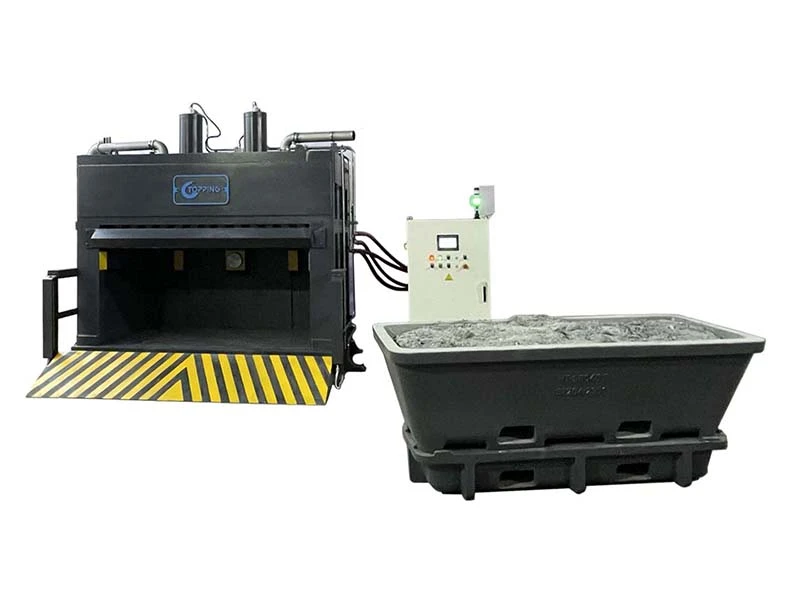
The Birth of the Thermite Dross Press System
The new system of thermite dross press emerges as a beacon of innovation, offering solutions to the challenges posed by traditional methods. Developed through rigorous research and development, this technology harnesses the power of thermite reactions to streamline the dross processing workflow.
Thermite Reactions in Metallurgy:
Thermite reactions involve the exothermic oxidation of a metal powder by another metal oxide. In the context of metallurgy, this chemical process can be harnessed to facilitate the reduction of metal oxides present in slag. The controlled application of thermite reactions in the new system proves to be a game-changer in slag processing.
Advantages of the New System
Energy Efficiency:
The thermite dross press system boasts unparalleled energy efficiency compared to traditional methods. By harnessing the exothermic nature of thermite reactions, the process minimizes energy input, resulting in a more sustainable and cost-effective approach.
Reduced Processing Time:
Traditional dross processing can be a time-consuming endeavor. The new system accelerates the reduction and elimination of metal oxides in dross, significantly reducing processing time without compromising the quality of the final product.
Environmental Impact:
The environmental footprint of metallurgical processes is a growing concern. The thermite dross press system addresses this by minimizing emissions and waste, making it an eco-friendly alternative to conventional methods.
Operational Mechanism of the Thermite dross Press System
Key Components:
1. Reactive Mixtures: The system relies on carefully formulated mixtures of metal powders and metal oxides to initiate controlled thermite reactions.
2. Pressing Unit: This integral component facilitates the pressing of the reactive mixtures, ensuring uniform distribution and optimal contact for efficient thermite reactions.
Process Workflow:
1. Preparation: The reactive mixture is prepared according to the specific requirements of the dross composition.
2. Loading: The prepared mixture is loaded into the pressing unit, where it undergoes controlled compression.
3. Thermite Reaction: The compressed mixture is subjected to controlled ignition, initiating thermite reactions that facilitate the reduction of metal oxides in the dross.
4. Product Separation: The processed dross is separated from the residual materials, resulting in a refined and purified product.
Case Studies and Real-world Applications
To validate the efficacy of the thermite dross press system, numerous case studies and real-world applications showcase its successful implementation across various metallurgical processes. From steel production to non-ferrous metal extraction, the system demonstrates versatility and reliability.
Steel Industry:
The thermite dross press system has been integrated into steelmaking processes to enhance the recovery of valuable metals from dross, ultimately improving the overall efficiency of steel production.
Aluminum Smelting:
In the aluminum industry, where dross management is a critical aspect, the new system has proven instrumental in recovering aluminum from complex oxide matrices, reducing waste and increasing resource utilization.
Challenges and Future Prospects
While the thermite dross press system represents a significant leap forward, challenges and opportunities for improvement persist. Researchers and engineers are actively exploring avenues to optimize the system further, addressing factors such as scalability, adaptability to varying slag compositions, and economic feasibility.
Scalability:
Adapting the thermite dross press system to different scales of operation remains a focal point. Researchers aim to develop scalable models that can cater to the diverse needs of both large-scale industrial applications and smaller-scale operations.
Slag Composition Variability:
The composition of dross can vary widely depending on the metallurgical process and raw materials used. Ongoing research focuses on developing adaptive formulations for reactive mixtures, ensuring the system's effectiveness across a spectrum of dross compositions.
Economic Viability:
The economic feasibility of implementing the new system is crucial for widespread adoption. Cost-benefit analyses and ongoing research into optimizing production costs aim to position the thermite dross press system as a financially viable solution for metallurgical facilities.
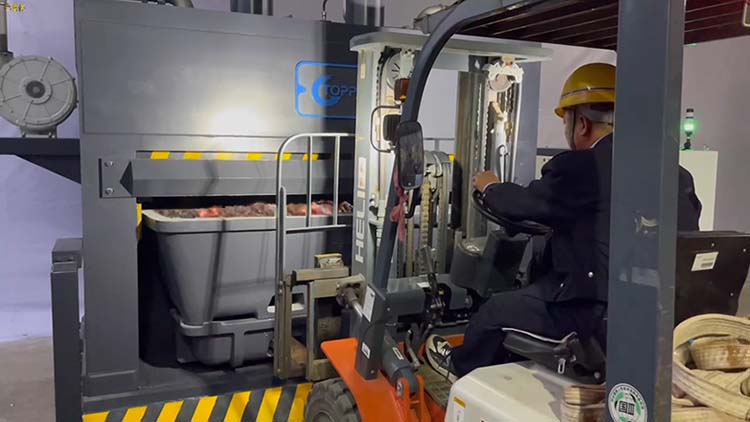
Conclusion
The purpose of our continuous improvement of the dross press system is to improve the working environment of the foundry and improve the dross recovery rate, so as to bring higher economic benefits to the factory, but also greatly reduce the labor intensity, ash and dross separation can be returned to the furnace or sold, but also to avoid emissions pollution, social benefits are significant. In short, with the shortage of global resources and environmental pollution problems, as well as the increasingly fierce competition in the aluminum processing industry, the recycling of aluminum dross is bound to become more important.
Contact us
86 029 87607185,86 029 87669660, 86 029 87607180 ext. 8003
Email: Tech@huan-tai.org
Address:No.68, 2nd Keji Road Xian, China 710075