

► What is Dross and Why is it Harmful?
Dross is a layer of impurities, oxides and dross that forms on the surface of molten metal. If the dross is not effectively removed before pouring, it may become entrained in the final casting, resulting in defects. The inclusion of dross is a pollutant that will affect the performance of castings. Dross entrainment defects such as pores, shrinkage holes, inclusions and surface defects will not only reduce the quality of castings, but also lead to returns and rework, increasing unnecessary costs and production delays. Therefore, the effect of dross treatment affects the reliability, performance and profitability of the casting, our steel casting dross pan can effectively solve this problem.
► How Does a Steel Casting Dross Pan Work?
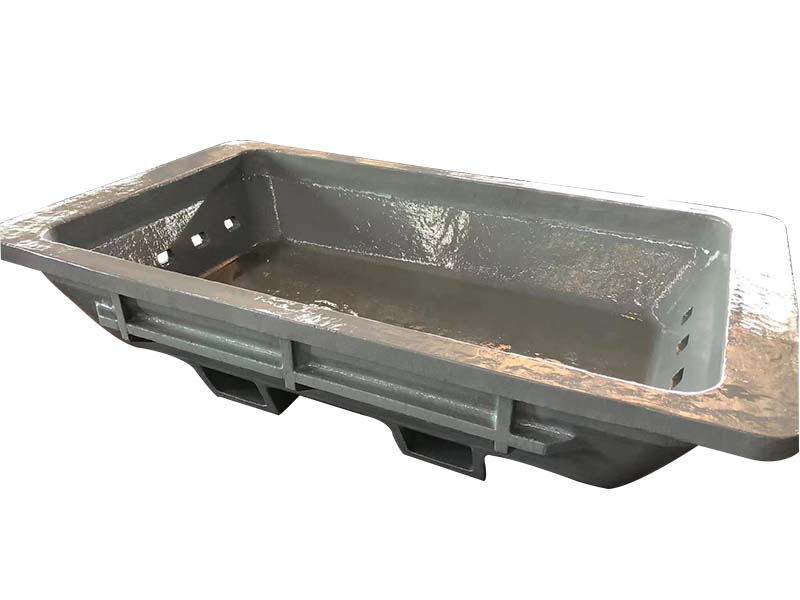
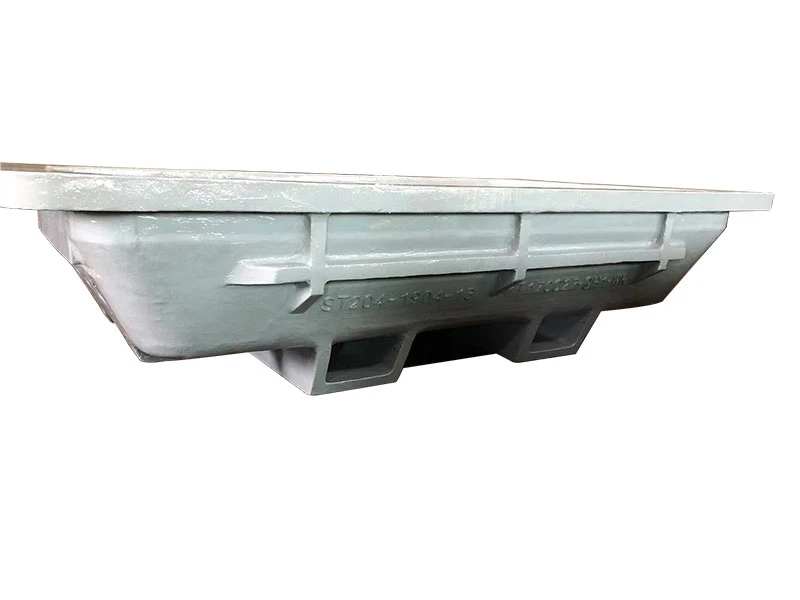
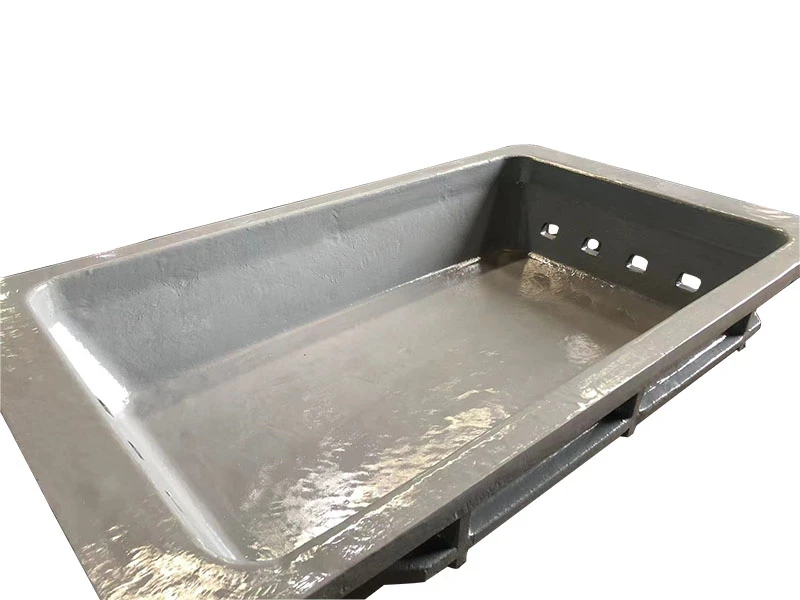
A steel casting dross pan is specially designed to remove and hold dross floating on top of molten metal. Here is an overview of how it works:
Installation: The dross pan is installed above the furnace at the lip where hot metal is poured. This positions the dross pan directly in the path of the molten stream during tapping.
Dross Collection: As the molten metal is poured from the furnace, the floating dross gets captured and held in the pan. The smooth steel construction prevents dross from sticking or splashing.
Removal: Between heats, the removable dross pan is taken away and the dross is scraped off and discarded. The pan can then be re-installed for the next tap.
Protection: The steel pan shields the transfer ladle from direct contact with dross during pouring. This prevents ladle erosion and contamination of the metal stream.
The specialized design and functionality of a steel casting dross pan play a crucial role in efficiently removing and containing floating dross from molten metal during the casting process. By effectively capturing and managing dross, the dross pan helps maintain casting quality, prolong equipment lifespan, and ensure the integrity of the metal stream. Its installation above the furnace and straightforward removal process make it an essential component for enhancing operational efficiency and product quality in steel casting dross pan.
► Key Benefits of Using a Dross Pan
Using a dedicated steel dross pan provides the following benefits for casting quality:
Improves Cleanliness: By effectively capturing dross, the pan prevents oxides and impurities from entering the casting mold. This results in cleaner, higher-purity metal.
Reduces Defects: Less dross means fewer contaminants in the final casting leading to reductions in quality defects like porosity and inclusions.
Increases Yield: More good castings can be poured from each heat as dross removal maximizes the amount of usable molten steel.
Extends Furnace Lining Life: Dross removal protects the furnace refractory from excessive erosion and wear from floating slag. This extends the campaign life of the furnace lining.
Enhances Mechanical Properties: With less entrained impurities, the metallurgical quality and mechanical properties of castings are improved.
Decreases Inspections/Rework: Higher casting quality means less time and cost spent on inspection, rework, and scrap.
The use of a dedicated steel dross pan yields significant benefits for casting quality, including improved cleanliness, reduced defects, increased yield, extended furnace lining life, enhanced mechanical properties, and decreased need for inspections and rework. These advantages contribute to overall operational efficiency and product quality in steel casting processes.
► Key Considerations for Proper Dross Pan Use
To leverage the full benefits, here are some key points for proper dross pan use:
Pan Size: Make sure the pan size and capacity match the heat size to avoid overflow. Length should allow for full stream capture.
Material: Durable steel construction resists warping and deterioration from constant high heat.
Placement: Position the pan outlet directly beneath the tap stream to catch all floating dross.
Angle: A sloped pan causes dross to flow to one end for easy removal. Angles around 30-45° are optimal.
Quick Removal: Remove and replace the pan quickly between heats to prevent backflow of dross into the furnace.
Cleaning: Thoroughly clean the pan of all dross buildup after each use to maintain effectiveness.
By carefully considering factors such as pan size, material, placement, angle, quick removal, and cleaning, proper dross pan use can significantly enhance the efficiency and effectiveness of the aluminum production process. These key considerations are essential for maximizing the benefits of dross pans and ensuring smooth operations in the smelting facility.
► Conclusion
In summary, a steel casting dross pan is an inexpensive yet valuable tool for improving quality in metal casting operations. By effectively capturing floating slag and oxides, the dross pan prevents harmful impurities from contaminating the molten metal stream. This results in cleaner steel, reduced defects, and higher casting yields. The use of a dedicated dross pan is an easy way for foundries to enhance the soundness of castings without significant capital investment. With proper installation, operation, and maintenance, a simple dross pan can significantly boost productivity and profitability. More information contact us at tech@huan-tai.org.
References:
Dross Formation During Melting and Casting Processes. Sahai, Y. and Emi, T. (2008). Transactions of the Indian Institute of Metals, 61(2-3), pp.229-233.
Effect of mold flux dross on properties of steels. Zhang, L., Thomas, B.G. and Sussman, R.C. (1994). Iron and Steelmaker, 21(12), pp.41-46.
Interaction of refractory materials with selected foundry alloys. Krause, H. and Pogodda, T. (2006). China Foundry, 3(1), pp.38–46.
Evaluation of steel cleanliness: a review. Verma, Ajit and Pistorius, P. Chris (2019). Journal of the Southern African Institute of Mining and Metallurgy, 119(3), pp.221-238.
Removal of inclusions from steel melts by bubble flotation technique. Singh, R. and Sarkar, B. (1996). Scandinavian Journal of Metallurgy, 25(2), pp.120-128.
Improving steel casting surface quality by removing surface oxide layers before mold pouring. Xu, W., Liu, X., Liu, B., Tang, H. and Jiang, H. (2018). AFS Transactions, 26, pp.545-552.
Contact us
Tel: 86 029 87608173
Email:Tech@huan-tai.org
Address:No.68, 2nd Keji Road Xian, China 710075