

As a seasoned supplier of steel castings, I've encountered numerous inquiries regarding the shrinkage rate of steel castings. This is a critical aspect that significantly impacts the quality and precision of the final products. In this blog, I'll delve into the concept of the shrinkage rate of steel castings, explore the factors influencing it, and discuss its implications in the manufacturing process.
Understanding the Shrinkage Rate of Steel Castings
The shrinkage rate of steel castings refers to the percentage reduction in volume or dimensions of a steel casting as it cools from the pouring temperature to room temperature. This phenomenon occurs due to the contraction of the steel as it solidifies and undergoes thermal changes. During the solidification process, the steel transitions from a liquid state to a solid state, and as it cools further, it continues to contract. This contraction can lead to dimensional changes in the casting, which must be carefully considered during the design and manufacturing stages.
There are two main types of shrinkage in steel castings: liquid shrinkage and solid shrinkage. Liquid shrinkage occurs when the steel is in a liquid state and is primarily due to the reduction in volume as the temperature decreases. Solid shrinkage, on the other hand, occurs after the steel has solidified and is mainly caused by the thermal contraction of the solid metal. The total shrinkage rate of a steel casting is the sum of the liquid shrinkage and the solid shrinkage.
Factors Influencing the Shrinkage Rate
Several factors can influence the shrinkage rate of steel castings. Understanding these factors is crucial for accurately predicting and controlling the shrinkage, ensuring the production of high-quality castings.
Chemical Composition
The chemical composition of the steel plays a significant role in determining the shrinkage rate. Different alloying elements can affect the solidification behavior and thermal properties of the steel, thereby influencing the shrinkage. For example, elements such as carbon, silicon, and manganese can increase the shrinkage rate, while elements like nickel and chromium can reduce it. By carefully selecting the chemical composition of the steel, manufacturers can optimize the shrinkage rate to meet the specific requirements of the casting.
Pouring Temperature
The pouring temperature of the steel is another important factor that affects the shrinkage rate. A higher pouring temperature results in a larger liquid shrinkage, as the steel has a greater volume in the liquid state. Additionally, a higher pouring temperature can also lead to a longer solidification time, which may increase the overall shrinkage. On the other hand, a lower pouring temperature can reduce the liquid shrinkage but may also cause issues such as incomplete filling of the mold. Therefore, it is essential to find the optimal pouring temperature to balance the shrinkage and the casting quality.
Mold Design and Material
The design and material of the mold can also have a significant impact on the shrinkage rate of steel castings. A well-designed mold can provide proper support and restraint to the casting during solidification, minimizing the distortion caused by shrinkage. The mold material can also affect the heat transfer rate, which in turn influences the solidification time and the shrinkage. For example, a mold made of a material with high thermal conductivity can promote faster solidification, reducing the shrinkage.
Cooling Rate
The cooling rate of the steel casting is a critical factor that affects the shrinkage rate. A faster cooling rate can increase the solid shrinkage, as the steel has less time to adjust to the dimensional changes during solidification. On the other hand, a slower cooling rate can reduce the shrinkage but may also lead to longer production times and increased costs. Therefore, it is important to control the cooling rate to achieve the desired shrinkage rate and casting quality.

Implications of the Shrinkage Rate in Manufacturing
The shrinkage rate of steel castings has several implications in the manufacturing process. Understanding these implications is essential for ensuring the production of high-quality castings that meet the required specifications.
Dimensional Accuracy
One of the most significant implications of the shrinkage rate is its impact on the dimensional accuracy of the casting. If the shrinkage rate is not properly accounted for, the final dimensions of the casting may deviate from the design specifications, resulting in parts that do not fit or function correctly. To ensure dimensional accuracy, manufacturers must use appropriate allowances in the mold design to compensate for the shrinkage. These allowances are based on the predicted shrinkage rate and are typically specified as a percentage of the nominal dimensions.
Internal Defects
The shrinkage rate can also affect the formation of internal defects in the casting. During solidification, the shrinkage can cause the formation of voids, porosity, and cracks in the casting. These defects can weaken the casting and reduce its mechanical properties, making it more susceptible to failure. To minimize the formation of internal defects, manufacturers must carefully control the shrinkage rate and ensure proper feeding of the casting during solidification.
Surface Finish
The shrinkage rate can also have an impact on the surface finish of the casting. If the shrinkage is not uniform, it can cause uneven surface contraction, resulting in a rough or uneven surface finish. To achieve a smooth and uniform surface finish, manufacturers must ensure that the shrinkage rate is consistent throughout the casting. This can be achieved by controlling the pouring temperature, cooling rate, and mold design.
Controlling the Shrinkage Rate
Controlling the shrinkage rate of steel castings is essential for ensuring the production of high-quality castings. There are several methods that manufacturers can use to control the shrinkage rate, including:
Mold Design Optimization
Optimizing the mold design is one of the most effective ways to control the shrinkage rate. By using appropriate allowances in the mold design, manufacturers can compensate for the shrinkage and ensure the dimensional accuracy of the casting. Additionally, the mold design can also influence the heat transfer rate and the solidification behavior of the steel, which can further affect the shrinkage rate.
Pouring Temperature Control
Controlling the pouring temperature is another important method for controlling the shrinkage rate. By carefully selecting the pouring temperature, manufacturers can minimize the liquid shrinkage and ensure proper filling of the mold. Additionally, the pouring temperature can also affect the solidification time and the cooling rate, which can further influence the shrinkage rate.
Cooling Rate Control
Controlling the cooling rate is crucial for controlling the shrinkage rate and minimizing the formation of internal defects. By using appropriate cooling methods, such as water cooling or air cooling, manufacturers can control the cooling rate and ensure uniform solidification of the casting. Additionally, the cooling rate can also affect the microstructure and mechanical properties of the casting, making it an important factor to consider in the manufacturing process.
Material Selection
Selecting the appropriate material is also essential for controlling the shrinkage rate. Different materials have different shrinkage rates, and by carefully selecting the material, manufacturers can optimize the shrinkage rate to meet the specific requirements of the casting. Additionally, the material selection can also affect the mechanical properties and the corrosion resistance of the casting, making it an important factor to consider in the design and manufacturing process.
Our Products and the Shrinkage Rate
At our company, we are committed to providing high-quality steel castings that meet the strictest standards of quality and precision. We understand the importance of the shrinkage rate in the manufacturing process, and we take every measure to ensure that our castings have the desired shrinkage rate and dimensional accuracy.
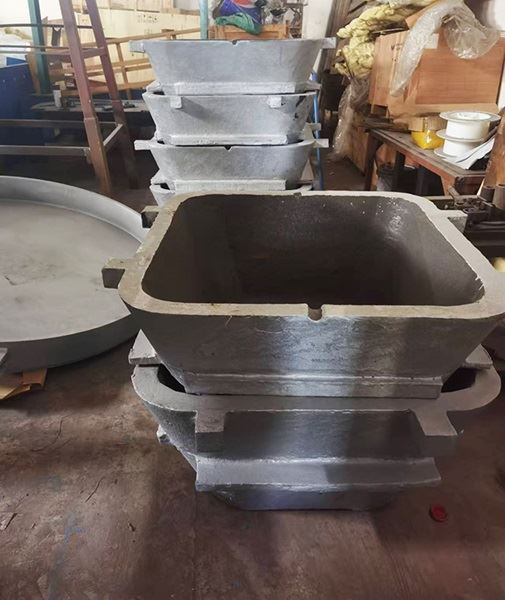
We offer a wide range of steel castings, including Copper Melting Mold, Steel Casting Dross Pan, and Slag Pot. Our products are made from high-quality materials and are manufactured using advanced techniques and equipment to ensure the highest level of quality and performance.
To ensure the dimensional accuracy of our castings, we use state-of-the-art mold design software to calculate the shrinkage rate and determine the appropriate allowances. Our experienced engineers and technicians carefully monitor the manufacturing process to ensure that the shrinkage rate is within the specified limits and that the castings meet the required specifications.
Contact Us for Your Steel Casting Needs
If you are in need of high-quality steel castings, we invite you to contact us for more information. Our team of experts is available to answer your questions and provide you with a customized solution that meets your specific requirements. Whether you need a single casting or a large production run, we have the capabilities and the expertise to deliver the products you need on time and within budget.
Don't hesitate to reach out to us for a consultation or a quote. We look forward to working with you and helping you achieve your goals.
References
- Campbell, J. (2003). Castings. Butterworth-Heinemann.
- Flemings, M. C. (1974). Solidification Processing. McGraw-Hill.
- Kalpakjian, S., & Schmid, S. R. (2008). Manufacturing Engineering and Technology. Pearson Prentice Hall.