

Hey there! As a supplier of Alloy Steel Ingot Sow Moulds, I've got a ton of experience in this field. Today, I'm gonna share with you how to comprehensively evaluate the performance of an Alloy Steel Ingot Sow Mould.
First off, let's talk about the physical properties. The density of the mould is crucial. A proper - density alloy steel ingot sow mould ensures uniform heat transfer during the casting process. If the density is too low, it might lead to uneven cooling of the steel ingot, resulting in internal defects like cracks or porosity. On the flip side, an overly - dense mould could cause excessive heat retention, which also messes up the quality of the ingot. You can check out Alloy Steel Ingot Sow Mould to get more info on the standardized density for these moulds.
Then, there's the hardness. An ideal mould needs to be hard enough to withstand the high - temperature molten steel. But it can't be so hard that it becomes brittle and prone to cracking under stress. Hardness testing is relatively straightforward. There are various testing methods out there, like the Rockwell or Brinell hardness tests. A mould with consistent hardness across its entire structure is definitely a plus. If the hardness varies a lot, it means the manufacturing process might have some issues, and it can cause problems during ingot production.
Another aspect of physical properties is the thermal conductivity. The mould should be able to transfer heat away from the molten steel at an appropriate rate. If the thermal conductivity is too high, the steel might solidify too quickly, leading to a rough surface finish on the ingot. If it's too low, the solidification process will be slow, and you might end up with a porous or uneven ingot.
Now, let's move on to the chemical composition. The alloying elements in the steel used for the mould play a huge role in its performance. For example, chromium is often added to increase the corrosion resistance and hardness of the mould. Molybdenum helps improve the high - temperature strength and toughness. Understanding the correct proportions of these elements is essential. Too much of one alloying element can upset the balance and affect the overall performance.
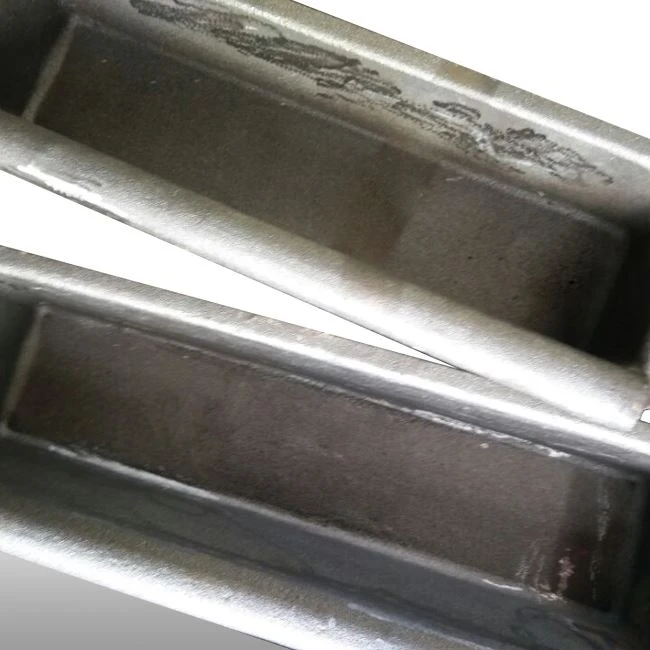
When it comes to the manufacturing process, the way the mould is made impacts its quality. Casting defects such as shrinkage cavities, blowholes, or inclusions can seriously degrade the performance of the mould. A well - manufactured mould should have a smooth surface finish inside. Any rough patches or irregularities can cause friction during the casting process, which might damage the surface of the ingot.
The durability of the Alloy Steel Ingot Sow Mould is also a key factor. How many casting cycles can it endure before it starts to wear out? A durable mould will save you money in the long run as you won't have to replace it as often. High - quality moulds can withstand a large number of casting cycles with minimal wear and tear.
Let's not forget about the size and dimensional accuracy of the mould. If the dimensions aren't precise, the ingots produced might not meet the required specifications. This can lead to a lot of waste and additional costs. The mould should match the design requirements exactly, ensuring that the final ingots have the right shape and size.
In addition to the above factors, the compatibility of the mould with the casting equipment is important. It should fit properly on the casting machine without any issues. If there are problems with the fit, it can cause misalignments during the casting process, resulting in defective ingots.
Now, let me tell you about some related products that might be of interest to you. We also offer Dross Pan For Aluminum Dross Treatment and Slag And Dross Pan. These products are essential for the overall aluminum production process and work hand - in - hand with the Alloy Steel Ingot Sow Moulds.

If you're in the market for high - quality Alloy Steel Ingot Sow Moulds or any of our related products, don't hesitate to reach out for a procurement discussion. We're here to provide the best solutions for your casting needs.
References
- Metallurgical textbooks on alloy steel and casting processes.
- Industry reports on the performance evaluation of steel casting moulds.