

As a supplier of Alloy Steel Ingot Sow Moulds, I've witnessed firsthand the intricate relationship between pouring speed and the effective use of these essential tools in the metalworking industry. The pouring speed of molten alloy steel into the sow mould is a critical parameter that can significantly impact the quality, efficiency, and overall performance of the casting process. In this blog, I'll delve into the various ways in which pouring speed affects the use of an Alloy Steel Ingot Sow Mould, drawing on my experience and industry knowledge.
Impact on Ingot Quality
One of the primary concerns when pouring molten alloy steel into a sow mould is achieving a high-quality ingot. The pouring speed plays a crucial role in determining the final structure and properties of the ingot. A slow pouring speed allows the molten steel to cool gradually, promoting the formation of a fine-grained structure. This fine-grained structure enhances the mechanical properties of the ingot, such as strength, toughness, and ductility. On the other hand, a fast pouring speed can lead to rapid cooling and the formation of a coarse-grained structure, which may result in reduced mechanical properties and increased susceptibility to cracking.
In addition to grain size, the pouring speed also affects the distribution of impurities and inclusions within the ingot. A slow pouring speed allows impurities and inclusions to float to the surface of the molten steel, where they can be removed before solidification. This helps to improve the purity and cleanliness of the ingot, which is essential for applications that require high-quality materials. Conversely, a fast pouring speed can trap impurities and inclusions within the ingot, leading to defects and reduced performance.
Influence on Mould Filling and Solidification
The pouring speed also has a significant impact on the filling and solidification of the sow mould. A slow pouring speed allows the molten steel to flow smoothly into the mould, filling all the cavities and corners without causing excessive turbulence. This helps to ensure a uniform distribution of the molten steel and reduces the risk of defects such as porosity, shrinkage, and cold shuts. In contrast, a fast pouring speed can cause the molten steel to splash and create turbulence, which may result in incomplete filling of the mould and the formation of defects.
During solidification, the pouring speed affects the rate of heat transfer from the molten steel to the mould. A slow pouring speed allows the heat to be transferred gradually, which helps to prevent thermal stress and cracking in the ingot. This is particularly important for large ingots, where the cooling rate can have a significant impact on the final quality of the product. A fast pouring speed, on the other hand, can cause rapid cooling and the development of high thermal stresses, which may lead to cracking and other defects.

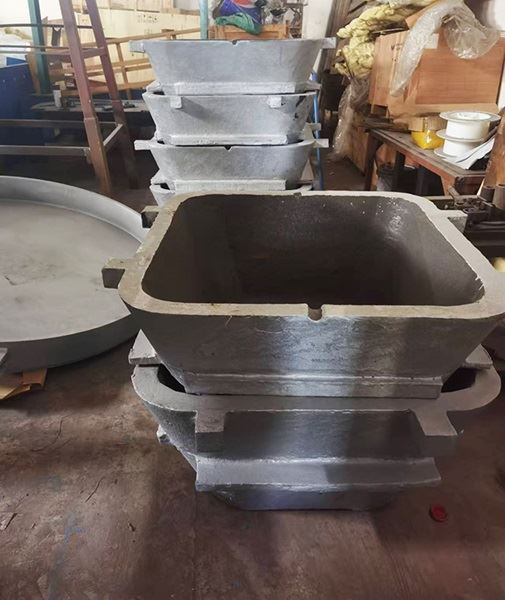
Effect on Mould Life and Maintenance
The pouring speed can also affect the life and maintenance requirements of the Alloy Steel Ingot Sow Mould. A slow pouring speed reduces the thermal shock and mechanical stress on the mould, which helps to extend its service life. This is because the gradual cooling and solidification of the molten steel minimize the expansion and contraction of the mould, reducing the risk of cracking and deformation. In addition, a slow pouring speed allows the mould to be cleaned and maintained more easily, as there is less residue and buildup of molten steel on the surface.
Conversely, a fast pouring speed can cause excessive thermal shock and mechanical stress on the mould, which may lead to premature failure and increased maintenance costs. The rapid cooling and solidification of the molten steel can cause the mould to expand and contract rapidly, leading to cracking and deformation. In addition, a fast pouring speed can result in the buildup of molten steel on the surface of the mould, which can be difficult to remove and may require more frequent cleaning and maintenance.
Considerations for Optimal Pouring Speed
Determining the optimal pouring speed for a specific application requires careful consideration of several factors, including the type of alloy steel, the size and shape of the ingot, the design of the sow mould, and the casting process. In general, a slower pouring speed is preferred for large ingots and alloys that are prone to cracking or have high thermal conductivity. A faster pouring speed may be suitable for small ingots and alloys that have low thermal conductivity and are less susceptible to cracking.
It's also important to note that the pouring speed should be consistent throughout the casting process to ensure uniform filling and solidification of the mould. Any variations in the pouring speed can lead to uneven cooling and the formation of defects in the ingot. To achieve a consistent pouring speed, it's recommended to use a pouring system that is designed to control the flow rate of the molten steel, such as a tundish or a ladle with a metering device.
Conclusion
In conclusion, the pouring speed has a significant impact on the use of an Alloy Steel Ingot Sow Mould. By carefully controlling the pouring speed, it's possible to improve the quality of the ingot, enhance the filling and solidification of the mould, extend the life of the mould, and reduce maintenance costs. As a supplier of Alloy Steel Ingot Sow Moulds, I understand the importance of providing our customers with high-quality products and technical support to help them achieve optimal results in their casting processes.
If you're interested in learning more about our Alloy Steel Ingot Sow Moulds or have any questions about pouring speed and its impact on the casting process, please don't hesitate to contact us. We'd be happy to discuss your specific requirements and provide you with customized solutions to meet your needs.