

Hey there! As a supplier of low profile sow moulds, I often get asked a crucial question: "Do low profile sow moulds need pre - heating?" Well, let's dig into this topic and find out.
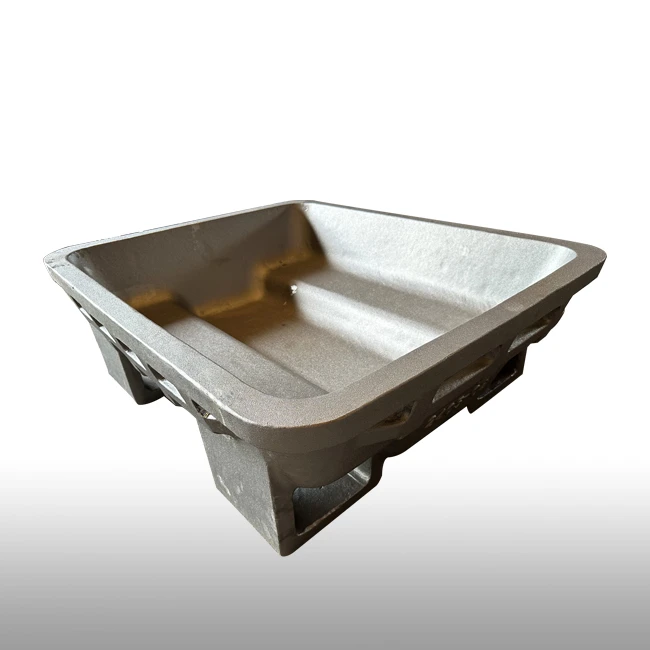
First off, let's understand what low profile sow moulds are. These are moulds used in the metal - casting industry, especially for creating sow bars, which are large, rectangular ingots. They come in various sizes and weights, like the 1000 Lbs/1200 Lbs/1500 Lbs/2000 Lbs Low Profile Sow Moulds with Forklift Pocket. The low profile design makes them easier to handle and transport, and they're popular because of their efficiency in the casting process.
Now, onto the main question: pre - heating. Pre - heating low profile sow moulds can have several benefits. One of the primary reasons is to reduce thermal shock. When hot molten metal is poured into a cold mould, the sudden temperature change can cause stress within the mould material. This stress can lead to cracks and premature wear of the mould, which means more frequent replacements and higher costs for the casting operation.
Let's take a look at the science behind it. Metals expand when heated and contract when cooled. When the molten metal hits the cold mould, the outer layer of the mould heats up quickly and expands. However, the inner part of the mould remains cold and doesn't expand as much. This differential expansion creates internal stress. By pre - heating the mould, we can minimize this difference in temperature and the resulting stress.
Another advantage of pre - heating is that it can improve the quality of the cast sow bars. A pre - heated mould allows the molten metal to flow more smoothly into all the corners and cavities of the mould. This results in a more uniform and defect - free casting. For instance, it can reduce the formation of cold shuts, which are areas where the molten metal doesn't fully fuse together. Cold shuts can weaken the sow bar and make it less suitable for further processing.
However, pre - heating also has its downsides. It takes time and energy. You need to have a reliable heating system in place, which adds to the initial investment. And the longer the pre - heating time, the more energy is consumed, increasing the operating costs. Also, if the pre - heating is not done correctly, it can cause problems. Over - heating the mould can lead to oxidation of the mould surface, which can also affect the quality of the castings.
So, do low profile sow moulds always need pre - heating? The answer isn't a simple yes or no. It depends on several factors.
Factors to Consider
Type of Metal
Different metals have different pouring temperatures and thermal properties. For example, aluminium has a relatively low melting point compared to steel. When casting aluminium using low profile sow moulds, pre - heating may not be as critical as it is for casting steel. Aluminium can tolerate a larger temperature difference between the molten metal and the mould without causing significant thermal shock.

Mould Material
The material of the low profile sow mould also plays a role. Some materials, like certain types of cast iron, are more resistant to thermal shock than others. If you're using a mould made of a thermally - resistant material, you may be able to get away with less pre - heating or even no pre - heating at all.
Production Volume
If you're running a high - volume casting operation, the cost of pre - heating might be more justifiable. The improved mould life and better casting quality can lead to long - term savings. On the other hand, for low - volume production, the extra time and energy spent on pre - heating may not be worth it.
Let's also touch on high profile sow moulds for a bit. We offer 1200 Lbs/1500 Lbs/2000 Lbs High Profile Sow Moulds and 2000lbs High Profile Sow Mold With Forklift Pocket. High profile sow moulds generally have a larger mass compared to low profile ones. This means they can absorb more heat from the molten metal without experiencing as much thermal shock. So, in some cases, pre - heating may be less necessary for high profile sow moulds.
In conclusion, whether low profile sow moulds need pre - heating is a decision that should be based on a careful assessment of your specific casting process. You need to weigh the benefits of reduced thermal shock and improved casting quality against the costs of pre - heating. If you're still not sure, we're here to help. We have a team of experts who can analyze your situation and give you personalized advice.
If you're in the market for high - quality low profile sow moulds or want to discuss your casting needs further, don't hesitate to reach out. We're always ready to have a chat about how we can meet your requirements and improve your casting operations.
References
- "Foundry Technology Handbook"
- "Metal Casting: Processes and Quality Control"