

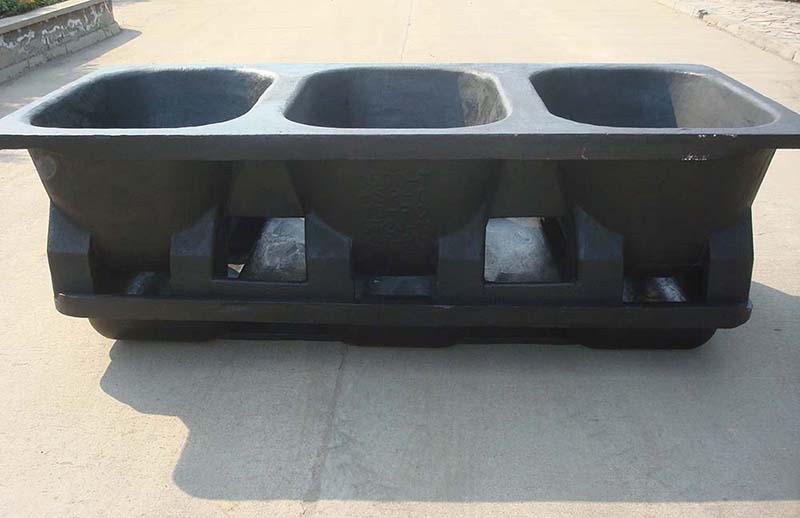
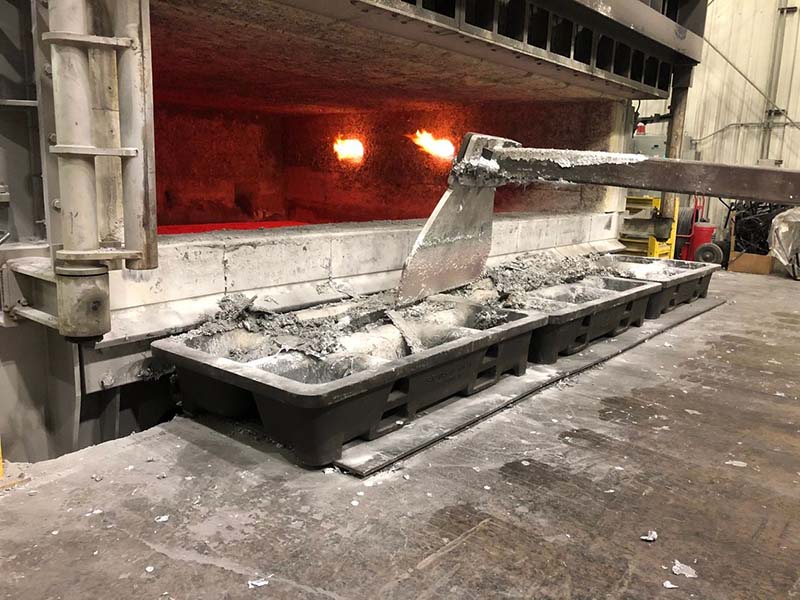
Aluminum ingot sow mold is good at carrying high-temperature slag, and its unique institutional design and rigorous process are specifically designed for the harsh environment of industrial manufacturing, thereby improving the recovery rate, improving the environment of the smelter, and solving a major problem of the industry
Improved Surface Finish
One of the notable advantages of gravity casting sow molds is the superior surface finish they impart to the castings. The controlled and steady flow of molten metal minimizes turbulence and air entrapment during the casting process, leading to a smooth and refined surface on the final product. This characteristic is crucial for applications where aesthetics and surface quality are paramount, such as in the automotive and aerospace industries.
Cost-Effectiveness
Gravity casting is a cost-effective casting method compared to some alternatives like die casting. The simplicity of the process, coupled with reduced tooling and equipment costs, makes gravity casting an economical choice for many manufacturers. Additionally, the reusable nature of the molds contributes to long-term cost savings, making it an attractive option for the production of medium to high volume components.
Material Versatility
Gravity casting sow molds accommodate a wide range of metal alloys, including aluminum, zinc, and copper-based alloys. This versatility allows manufacturers to choose materials that best suit the desired properties of the final product, such as strength, corrosion resistance, and thermal conductivity. The ability to work with various materials enhances the applicability of gravity casting across diverse industries.
Environmental Considerations
The gravity casting process is known for its environmentally friendly characteristics. Unlike some casting methods that may involve excessive energy consumption or produce harmful emissions, gravity casting typically requires lower energy input. The process also generates minimal waste, as the reusable molds contribute to a more sustainable and eco-friendly manufacturing approach.
Consistency and Reproducibility
Gravity casting sow molds ensure a high level of consistency and reproducibility in the castings produced. The controlled pouring of molten metal and the reliance on gravity for filling the mold result in uniform properties across multiple castings. This consistency is crucial for industries where precise performance specifications must be met for every component, such as in the manufacturing of critical engine parts.
Reduced Machining Requirements
The high precision achieved through gravity casting often translates to reduced post-casting machining requirements. This is particularly advantageous in scenarios where tight tolerances and intricate shapes are essential. Minimizing the need for extensive machining not only saves time and resources but also contributes to the overall cost-effectiveness of the manufacturing process.
Conclusion
In conclusion, the advantages of gravity casting sow molds in both process structure and performance are significant contributors to the widespread adoption of this casting method. The precision, improved surface finish, cost-effectiveness, material versatility, environmental considerations, consistency, and reduced machining requirements make gravity casting an attractive choice for manufacturers seeking high-quality, intricate, and cost-efficient metal components. As industries continue to demand excellence in their products, gravity casting sow molds are likely to remain a key player in the world of metal casting.
Contact us
86 029 87607185 86 029 87669660 86 029 87607180 ext. 8003
Email:tech@huan-tai.org
Address:No.68, 2nd Keji Road Xian, China 710075