

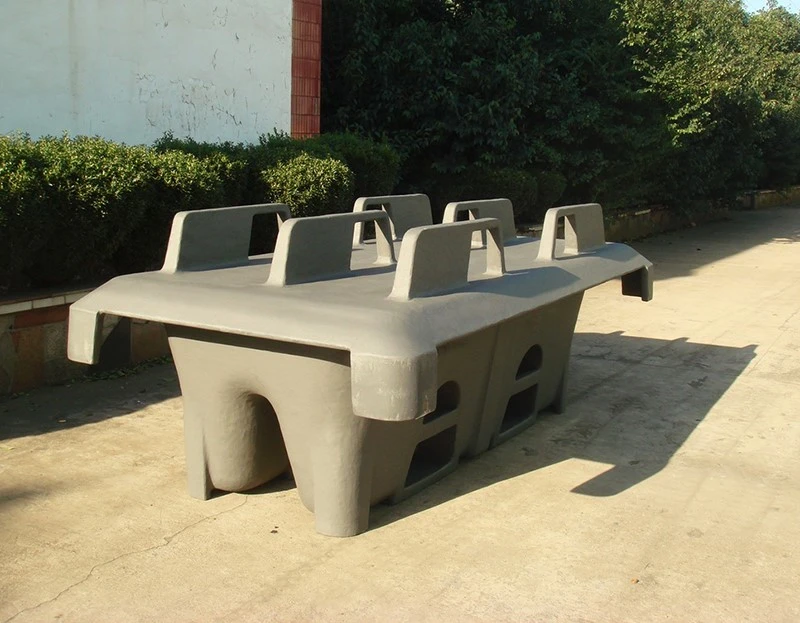
Our dross sludge pans design is the result of our collection of customer ideas and continuous experimental redesign manufacturing, while we have also developed our proprietary material 8630 WCB 9 to help customers recycle aluminum more efficiently, reduce complex procedures, and make the ingots more durable than existing on the market, in order to reduce operating costs.
What Materials are Typically Used in Dross Sludge Pan Construction?
The choice of material for dross sludge pans is critical to their durability and functionality. Because of its resistance to corrosive substances and high temperatures, cast alloy steel is a material that is frequently used. It guarantees that the pans can withstand the challenging circumstances of the casting process without sacrificing their integrity.
Because of its exceptional resistance to corrosion and high temperatures, stainless steel is frequently employed in this application and can endure the hostile chemical environment that defines dross accumulation. Its durability and ease of maintenance further contribute to its widespread use. Besides cast alloy steel, other materials are also utilized in the construction of the product to meet specific operational requirements.
Refractory materials are frequently incorporated into the design to provide superior heat resistance and protection against thermal shock. These materials are crucial in safeguarding the structural integrity of the pans when exposed to extreme temperatures during the casting process. Overall, the selection of materials for dross sludge pan construction is a critical consideration, as it directly impacts the longevity, performance, and durability of the product. Ceramic materials are occasionally integrated into the construction of the product, particularly in instances where heightened thermal insulation and resistance to chemical erosion are paramount.
How Do Design Features Affect the Efficiency of Dross Sludge Pans?
Efficiency in dross sludge pans is influenced by several design features. Large corner radii, for example, aid in releasing solidified baths, reducing stress and the need for manual intervention. Additionally, the inclusion of fork channels and lifting hooks facilitates easy handling and transportation of the pans, streamlining the process and reducing downtime.
The material composition of it can significantly impact its efficiency. Opting for materials with high thermal conductivity, such as aluminum or copper alloys, enhances heat transfer within the pans, promoting faster cooling and solidification of dross. This accelerates the separation of dross from the molten metal, improving overall process efficiency.
The presence of drainage channels and sloped surfaces in the product enables efficient removal and collection of liquid metal and dross residues. Proper drainage design prevents the accumulation of excess liquid metal, minimizing the risk of splashing and improving the clarity of the separated dross. This feature not only enhances operational safety but also contributes to maintaining a clean working environment.
The size and capacity of it play a crucial role in determining its efficiency. Larger pans with adequate capacity can accommodate higher volumes of dross and liquid metal, reducing the frequency of emptying and refilling. This not only increases productivity but also minimizes downtime associated with pan maintenance and reconfiguration.
By considering and optimizing key design features such as corner radii, material composition, handling mechanisms, drainage systems, and size, manufacturers can enhance the efficiency of the product in aluminum recycling processes. These design considerations promote smoother operations, improved product quality, and cost savings, making them essential components in achieving optimal performance and sustainability in the recycling industry.
What are the Environmental Implications of Dross Sludge Pan Design?
The design of dross sludge pans also has environmental implications. By effectively collecting dross, these pans help prevent the release of harmful substances into the environment. Furthermore, the pans can be designed to facilitate the recycling of the collected dross, contributing to the conservation of resources and promoting a circular economy.
The environmental implications of dross sludge pan design extend beyond waste containment and recycling. The material selection for the pans can have a significant impact on environmental sustainability. Opting for durable and corrosion-resistant materials not only prolongs the lifespan of the pans but also reduces the need for frequent replacements, minimizing resource consumption and waste generation.
The design of it can incorporate features that enhance energy efficiency and reduce environmental impact. For instance, the integration of insulation materials in the pan structure can help retain heat during the cooling process, reducing energy consumption and greenhouse gas emissions. By optimizing thermal management within the pans, manufacturers can promote energy efficiency and operational sustainability in aluminum recycling facilities.
The thoughtful design of the product can have positive environmental implications by minimizing pollution, promoting resource conservation, enhancing energy efficiency, and supporting sustainable operations in the aluminum recycling industry. By prioritizing eco-friendly design features and practices, manufacturers can contribute to a cleaner and greener future for the recycling sector.
In conclusion, the meticulous consideration of design features in dross sludge pans is crucial for ensuring not only efficiency, durability, and environmental compliance but also operational safety and cost-effectiveness. The utilization of materials like cast alloy steel is driven by their exceptional heat and corrosion resistance, contributing to prolonged service life and minimized maintenance requirements.
Additionally, the incorporation of design elements such as large corner radii and strategically positioned lifting hooks serves to enhance the ease of handling and processing, thus optimizing workflow efficiency and reducing potential safety risks.
As the metal casting industry progresses, there is a growing emphasis on the development of even more sophisticated designs for the product, with a focus on advancing sustainability and resource efficiency. As the metal casting industry continues to evolve, its design will likely become even more sophisticated, further enhancing its role in sustainable manufacturing. More information contact us at tech@huan-tai.org.
References:
Pyrotek. (n.d.). Dross/Drain/Bath Pans. Retrieved from https://www.pyrotek.com/products/foundry/show/ProductLine/drossdrainbath-pans
SpringerLink. (n.d.). The Implementation of a Comprehensive Dross Management Program at Constellium Ravenswood. Retrieved from https://link.springer.com/chapter/10.1007/978-3-319-72284-9_150
ScienceDirect. (2023). Comprehensive treatments of aluminum dross in China: A critical review. Retrieved from https://www.sciencedirect.com/science/article/pii/S0301479723013634
Contact us
Tel: 86 029 87608173
Email:Tech@huan-tai.org
Address:No.68, 2nd Keji Road Xian, China 710075