

Historical Perspective
Advanced Materials
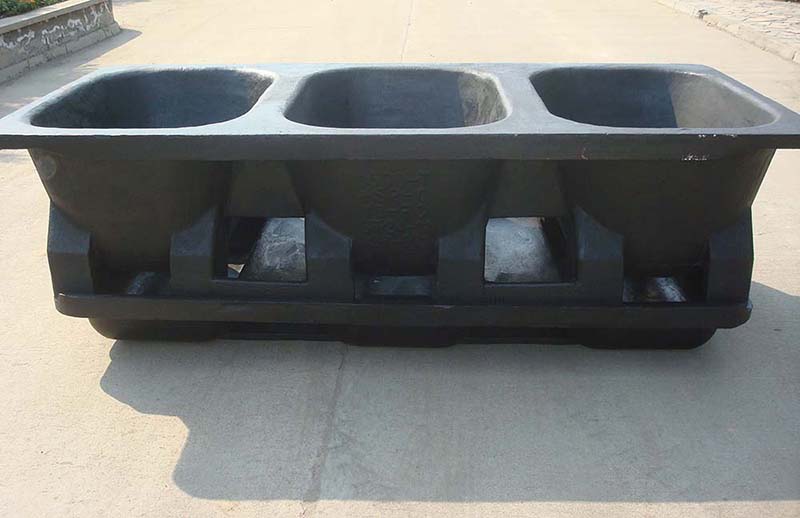
One of the critical aspects of modern casting technology is the utilization of advanced materials. Traditional molds often faced challenges related to durability and resistance to extreme conditions. However, with the introduction of high-performance materials, such as refractory alloys and specialized ceramics, large-sized ingot molds can now withstand high temperatures, corrosive environments, and prolonged usage. These materials contribute to extended mold lifespans and improved overall performance.
Computer-Aided Design (CAD) and Simulation
The integration of Computer-Aided Design (CAD) and simulation tools has significantly enhanced the precision and efficiency of large-sized sow mold casting. Engineers can now create intricate designs and simulate the casting process, allowing for thorough analysis of potential issues before actual production. This not only reduces the likelihood of defects but also optimizes the use of materials, minimizing waste and improving cost-effectiveness.
3D Printing Technology
In recent years, 3D printing technology has emerged as a game-changer in the casting industry. The ability to create complex geometries and intricate designs with precision has revolutionized the production of large-sized ingot molds. 3D printing offers a rapid prototyping process, enabling manufacturers to test and iterate designs quickly. This technology not only accelerates the overall production timeline but also allows for customization according to specific industry requirements.
Automation and Robotics
Automation and robotics have become integral components in modern casting facilities. Automated systems streamline the casting process, reducing manual labor and human error. Robots can handle repetitive tasks with precision and speed, contributing to higher production rates and improved consistency in large-sized ingot mold manufacturing. Additionally, automation enhances workplace safety by minimizing the exposure of workers to hazardous environments.
Advanced Cooling Systems
Efficient cooling is crucial in the casting process to ensure the proper solidification of molten metal. Advanced cooling systems, such as water-cooled molds and temperature control mechanisms, have been developed to optimize the cooling process. These systems help prevent defects like porosity and ensure uniform grain structure, resulting in high-quality large-sized aluminum sow molds with enhanced mechanical properties.
Continuous Casting Technology
Continuous casting technology represents a significant leap forward in the production of large-sized ingot molds. This process involves the continuous pouring of molten metal into a mold, allowing for a continuous, uninterrupted production flow. Continuous casting not only increases efficiency but also produces ingot molds with improved structural integrity and homogeneity.
Conclusion
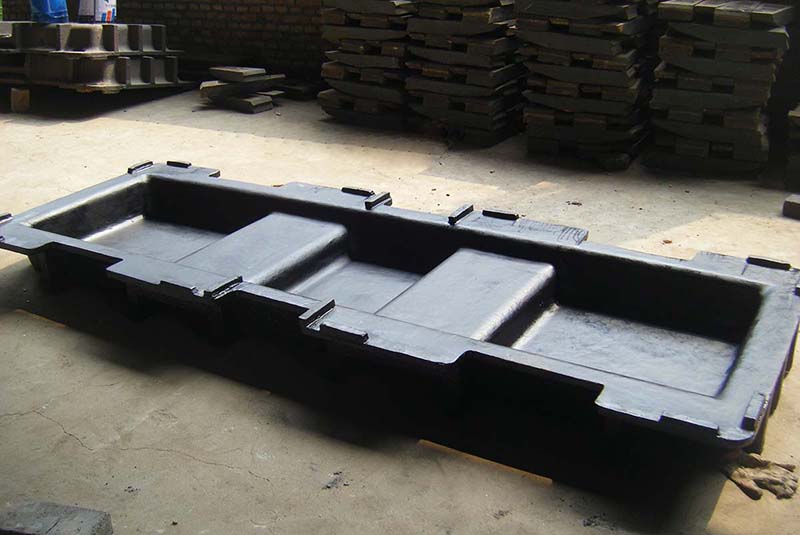
The development of large aluminum ingot mold casting technology has been a sign of continuous innovation and progress. From the use of advanced materials to the integration of cutting-edge technologies such as 3D printing and automation, the aluminum industry is also constantly changing. The development of technology has not only improved the efficiency and quality of large-sized aluminum sow molds and drain pans production, but also contributed to the overall progress of the industry that relies on these important equipment, and has also brought significant economic benefits to the factory.
Contact us
86 029 87607185,86 029 87669660, 86 029 87607180 ext. 8003
Email: Tech@huan-tai.org
Address:No.68, 2nd Keji Road Xian, China 710075