

Hey there! As a supplier of low profile sow moulds, I've had my fair share of experiences and insights into these nifty pieces of equipment. Today, I'm gonna talk about one crucial aspect of low profile sow moulds: venting. So, what's the role of venting in low profile sow moulds? Let's dive right in.
Why Venting Matters in Low Profile Sow Moulds
First off, let's understand what low profile sow moulds are used for. These moulds are designed to cast large blocks of metal, usually aluminum, into a specific shape and size. The low profile design allows for easier handling and transportation of the cast metal. But here's the thing: when you're pouring molten metal into a mould, there's a whole lot of air and gases trapped inside. That's where venting comes in.
Venting in low profile sow moulds serves several important purposes. One of the primary functions is to allow the escape of air and gases during the casting process. When molten metal is poured into the mould, it displaces the air inside. If there's no proper venting, this air can get trapped, causing defects in the final cast product. These defects can range from small air pockets to larger voids, which can weaken the structural integrity of the metal block.
Another key role of venting is to prevent the build-up of pressure inside the mould. As the molten metal cools and solidifies, it contracts. If the air and gases can't escape, the pressure inside the mould can increase significantly. This can lead to a variety of problems, such as mould cracking, uneven casting, and even explosions in extreme cases. By providing a path for the air and gases to escape, venting helps to maintain a stable pressure inside the mould, ensuring a smooth and successful casting process.
Types of Venting in Low Profile Sow Moulds
There are several different types of venting systems that can be used in low profile sow moulds. One common method is the use of vent holes. These are small holes drilled into the mould at strategic locations to allow the air and gases to escape. The size and number of vent holes depend on the size and design of the mould, as well as the type of metal being cast.
Another type of venting system is the use of vents channels. These are narrow channels that are cut into the surface of the mould to provide a path for the air and gases to flow. Vent channels are often used in conjunction with vent holes to ensure efficient venting.
Some low profile sow moulds also use porous materials in the venting system. These materials allow the air and gases to pass through while preventing the molten metal from leaking out. Porous venting materials can be particularly effective in preventing the formation of air pockets and other defects in the cast product.
Benefits of Proper Venting
Proper venting in low profile sow moulds offers a number of benefits. First and foremost, it improves the quality of the cast product. By allowing the air and gases to escape, venting helps to eliminate defects such as air pockets and voids, resulting in a more uniform and structurally sound metal block.
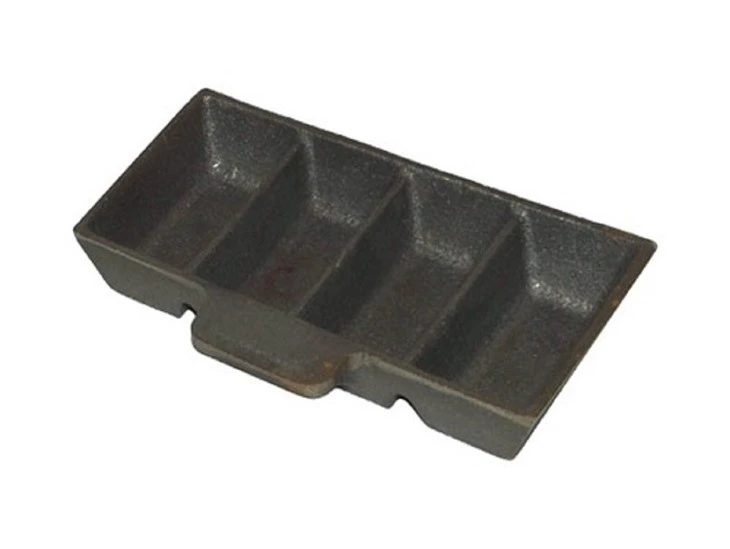

In addition to improving product quality, proper venting also increases the efficiency of the casting process. When the air and gases can escape easily, the molten metal can flow more freely into the mould, reducing the risk of incomplete filling and other casting problems. This can lead to faster casting times and higher production rates.
Proper venting also helps to extend the lifespan of the mould. By preventing the build-up of pressure inside the mould, venting reduces the stress on the mould material, which can help to prevent cracking and other forms of damage. This can save you money in the long run by reducing the need for frequent mould replacements.
Our Low Profile Sow Moulds and Venting
At our company, we understand the importance of proper venting in low profile sow moulds. That's why we design and manufacture our moulds with high-quality venting systems to ensure the best possible casting results.
Our 1000 Lbs/1200 Lbs/1500 Lbs/2000 Lbs Low Profile Sow Moulds with Forklift Pocket are equipped with precision-engineered vent holes and channels to allow for efficient air and gas escape. We also use high-quality porous materials in our venting systems to ensure maximum venting performance.
In addition to our standard low profile sow moulds, we also offer 1200 Lbs/1500 Lbs/ 2000 Lbs High Profile Sow Moulds with Fork Pocket and Molten Metal Sow Mold with advanced venting features. These moulds are designed to meet the specific needs of our customers and provide reliable and efficient casting solutions.
Conclusion
In conclusion, venting plays a crucial role in the performance and quality of low profile sow moulds. By allowing the escape of air and gases during the casting process, venting helps to prevent defects, maintain a stable pressure inside the mould, and improve the overall efficiency of the casting process.
If you're in the market for high-quality low profile sow moulds with excellent venting capabilities, look no further. We're here to provide you with the best products and services to meet your casting needs. Whether you're a small-scale foundry or a large industrial manufacturer, we have the expertise and experience to help you achieve the best possible casting results.
So, if you're interested in learning more about our low profile sow moulds or have any questions about venting or the casting process, don't hesitate to get in touch. We'd love to hear from you and discuss how we can help you take your casting operations to the next level.
References
- "Casting Handbook: Metal Casting Processes, Materials, and Technologies" by Peter Groche and Thomas Neugebauer
- "Foundry Technology: Principles and Applications" by R. S. Khurmi and J. K. Gupta