

Hey there! As a supplier of Jaw Crusher Wear Parts, I've spent a ton of time digging into what makes these parts tick. One of the most crucial aspects is the role of alloy elements. So, let's dive right in and explore how these elements shape the performance of jaw crusher wear parts.
First off, let's talk about what alloy elements are. In simple terms, they're metals or non - metals added to a base metal to enhance its properties. In the case of jaw crusher wear parts, the base metal is usually some form of steel, and the alloy elements can really take its performance to the next level.
One of the most common alloy elements used in jaw crusher wear parts is chromium (Cr). Chromium is a real game - changer. It forms hard carbides in the steel matrix. These carbides are like tiny, super - tough shields within the metal. They significantly increase the hardness of the wear parts, which is a big deal when you're dealing with the constant abrasion and impact in a jaw crusher. The harder the wear parts, the more resistant they are to being worn down by the rocks and minerals being crushed. For example, in a quarry where large, abrasive stones are being processed, jaw crusher wear parts with a good amount of chromium can last much longer than those without. This means less downtime for part replacement and more productivity for the operation. You can check out our Jaw Crusher Wear Parts to see how chromium is incorporated to enhance performance.
Another important alloy element is nickel (Ni). Nickel improves the toughness of the steel. In a jaw crusher, the wear parts are not only subject to abrasion but also to high - impact forces. When a large rock is fed into the crusher, it hits the wear parts with a lot of energy. If the wear parts are too brittle, they can crack or break under this impact. Nickel helps to prevent this by making the steel more ductile. It allows the wear parts to deform slightly under impact without fracturing. This is especially useful in applications where the size and hardness of the rocks being crushed vary widely. For instance, in a mining operation where different types of ores are being processed, the nickel - enhanced jaw crusher wear parts can better withstand the unpredictable impact forces.
Molybdenum (Mo) is also a key player. Molybdenum helps to refine the grain structure of the steel. A finer grain structure means better mechanical properties overall. It increases both the strength and the toughness of the wear parts. Moreover, molybdenum has an interesting property - it can improve the hardenability of the steel. This means that during the heat - treatment process, the steel can achieve a more uniform hardness throughout its cross - section. In a jaw crusher, this is important because the wear parts need to have consistent properties from the surface all the way to the core. A wear part with good hardenability will maintain its performance even as the outer layer wears away.
Manganese (Mn) is yet another alloy element that's widely used. Manganese has a unique ability to work - harden under impact. When the jaw crusher wear parts are in operation, the impact from the rocks causes the manganese - containing steel to become harder on the surface. This self - hardening effect provides an extra layer of protection against wear. It's like the wear parts are constantly adapting to the harsh environment of the crusher. In a secondary or tertiary crushing stage, where the rocks are smaller but still cause significant wear, manganese - alloyed jaw crusher wear parts can be extremely effective.
Now, let's consider how these alloy elements interact with each other. It's not just about adding one element; it's about finding the right balance. For example, a combination of chromium and nickel can provide both high hardness and good toughness. The chromium gives the wear resistance, while the nickel ensures that the wear parts don't break under impact. Similarly, molybdenum can work in harmony with manganese to enhance the overall performance of the steel. By carefully selecting and controlling the amounts of these alloy elements, we can create jaw crusher wear parts that are optimized for different applications.
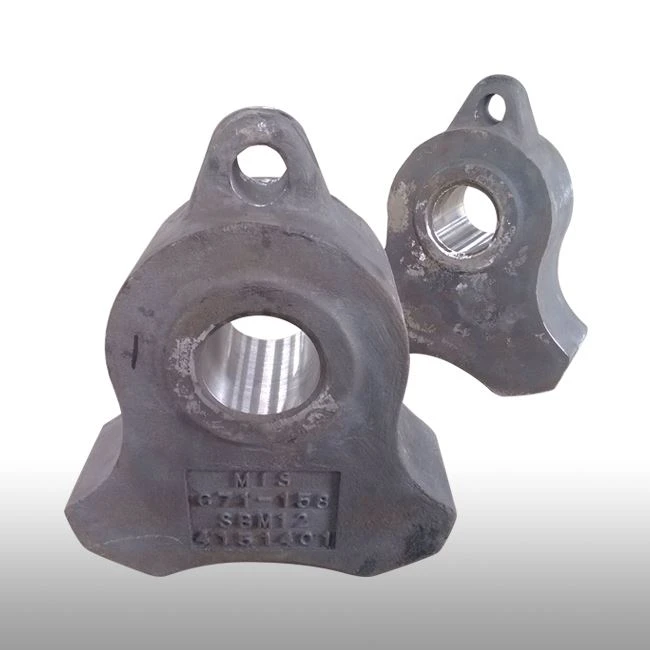

When it comes to different types of crushers, the role of alloy elements can vary slightly. Take cone crushers and impact crushers for example. In cone crushers, the wear parts are subject to a different type of stress compared to jaw crushers. The crushing action in a cone crusher is more of a squeezing and grinding motion. For Cone Crusher Wear Parts, alloy elements like chromium and molybdenum are still important for wear resistance and strength, but the emphasis might be more on achieving a fine - grained structure to withstand the continuous grinding forces.
In impact crushers, the wear parts experience high - velocity impacts. Here, the toughness provided by nickel and the work - hardening ability of manganese become even more crucial. The Impact Crusher Wear Parts need to be able to absorb the energy of the impacts without breaking or deforming too much.
As a supplier of jaw crusher wear parts, we understand the importance of these alloy elements. We use advanced metallurgical techniques to ensure that the right combination of elements is present in our products. Our R & D team is constantly working on improving the alloy compositions to meet the ever - changing demands of the industry. Whether you're in a small - scale quarry or a large - scale mining operation, we have the jaw crusher wear parts that are tailored to your specific needs.
If you're looking for high - quality jaw crusher wear parts that are optimized with the right alloy elements, don't hesitate to get in touch. We can provide you with detailed information about our products, including the alloy compositions and how they will perform in your application. Let's work together to improve the efficiency and longevity of your crusher operations.
References
-ASM Handbook Volume 1: Properties and Selection: Irons, Steels, and High - Performance Alloys
-Boyer, H.E. (Ed.). (1985). Atlas of Isothermal Transformation and Cooling Transformation Diagrams. ASM International.
-Lin, D., & Lin, J. (2006). Wear Behavior of High - Chromium White Cast Iron under Different Impact Conditions. Wear, 261(1 - 2), 86 - 93.