

Hey there, folks! As a supplier of Crusher Wear Parts, I've seen firsthand how these parts can make or break the quality of the crushed product. In this blog, I'm gonna dive deep into the impact of crusher wear parts on the final output.

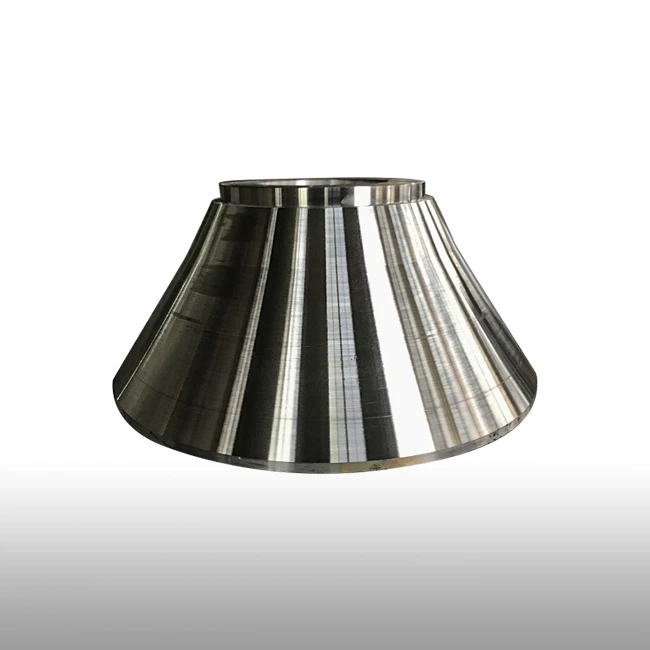
Let's start with the basics. Crusher wear parts are the components of a crusher that are subject to wear and tear during the crushing process. These parts include things like jaws, mantles, concaves, and hammerheads. Their main job is to break down large rocks and minerals into smaller, more manageable pieces. But here's the thing: the condition and quality of these wear parts can have a huge influence on the quality of the crushed product.
Particle Size Distribution
One of the most important factors in the quality of a crushed product is its particle size distribution. You want a product that has a consistent and desirable particle size, whether it's for construction materials, mining applications, or something else. Well, the wear parts in your crusher play a big role in achieving this.
When the wear parts are in good condition, they can effectively break down the feed material into the desired particle sizes. For example, in a jaw crusher, the jaws need to be properly aligned and have the right shape to crush the rocks evenly. If the jaws are worn out, they might not close properly, resulting in larger particles slipping through the crusher. This can lead to an uneven particle size distribution in the final product.
Similarly, in a cone crusher, the mantle and concave need to be in good shape. The Cone Crusher Wear Parts are designed to gradually reduce the size of the rocks as they pass through the crushing chamber. But if the mantle or concave is worn, it can affect the compression ratio and the way the rocks are fractured. This can cause an increase in the amount of oversized or undersized particles in the crushed product.
In a hammer mill, the Mining Crusher Parts Hammerhead is the key wear part. A well - maintained hammerhead can deliver a powerful blow to the rocks, breaking them into the right sizes. However, as the hammerhead wears, it loses its mass and shape, which can lead to less efficient crushing and a wider range of particle sizes.
Product Shape
Another aspect of product quality is its shape. In many applications, such as concrete production, the shape of the crushed aggregate is crucial. Cubical - shaped particles are preferred because they provide better packing and workability. The crusher wear parts can have a significant impact on the shape of the crushed product.
High - quality wear parts are designed to produce a more cubical particle shape. In a cone crusher, for instance, the design of the mantle and concave can promote a more uniform and cubical crushing action. When the wear parts are worn, this beneficial crushing action is compromised. The rocks may be fractured in an irregular way, resulting in more flaky or elongated particles.
In a jaw crusher, the wear of the jaws can also affect the particle shape. If the jaws are worn unevenly, the rocks may not be crushed symmetrically, leading to a less desirable particle shape. This can have a negative impact on the performance of the final product, especially in applications where particle shape matters.
Product Purity
Product purity is also an important consideration, especially in industries like mining and chemical processing. The crusher wear parts can contaminate the crushed product if they are made of low - quality materials or if they are worn to the point where they start to break down.
For example, if the wear parts are made of a material that is prone to corrosion or abrasion, small particles of the wear part material can mix with the crushed product. This can introduce impurities and affect the chemical composition and purity of the final product. In a mining operation, this can lead to lower - grade ore and reduced profitability.
On the other hand, high - quality Crusher Spare Parts made from durable and non - contaminating materials can help maintain the purity of the crushed product. These parts are designed to resist wear and tear for a longer time, reducing the risk of contamination.
Efficiency and Throughput
The condition of the crusher wear parts also affects the efficiency and throughput of the crusher. A well - maintained set of wear parts allows the crusher to operate at its optimal capacity. When the wear parts are in good condition, the crusher can crush the feed material more quickly and with less energy consumption.
As the wear parts start to wear, the crusher has to work harder to break down the rocks. This not only reduces the throughput but also increases the energy consumption. For example, in a worn - out jaw crusher, the jaws may not be able to close fully, so the crusher has to make multiple passes to crush the rocks to the desired size. This slows down the entire crushing process and can lead to higher operating costs.
In a cone crusher, worn wear parts can cause a decrease in the crushing force, which means that the crusher may not be able to handle as much feed material. This can result in a bottleneck in the production line and a reduction in overall productivity.
Choosing the Right Crusher Wear Parts
So, how do you ensure that you're getting the best quality crushed product? It all starts with choosing the right crusher wear parts. As a supplier, I know that there are a lot of options out there, but not all wear parts are created equal.
You need to consider factors like the type of crusher you're using, the material you're crushing, and the operating conditions. For example, if you're crushing hard and abrasive materials, you'll need wear parts that are made from high - strength and wear - resistant materials.
It's also important to work with a reliable supplier. A good supplier can provide you with expert advice on which wear parts are best for your specific application. They can also offer high - quality products that are designed to last and perform well.
Maintenance and Replacement
Once you've chosen the right wear parts, proper maintenance and replacement are key. Regularly inspecting the wear parts can help you catch any signs of wear early on. You can then replace the parts before they cause significant problems with the quality of the crushed product.
For example, in a jaw crusher, you can check the wear of the jaws by measuring the distance between the jaws at different points. If the wear is uneven or if the jaws are approaching the end of their service life, it's time to replace them.
In a cone crusher, you can inspect the mantle and concave for signs of wear, such as cracks or excessive thinning. By replacing these parts in a timely manner, you can ensure that the crusher continues to produce high - quality crushed products.
Wrapping It Up and Invitation
In conclusion, crusher wear parts have a profound impact on the quality of the crushed product. From particle size distribution and shape to product purity, efficiency, and throughput, every aspect of the final output is affected by the condition and quality of these parts.
As a supplier of Crusher Wear Parts, I'm here to help you make the right choices for your crushing operations. Whether you're in the construction, mining, or any other industry that requires crushing, we've got the expertise and the products to meet your needs. If you're looking to improve the quality of your crushed product and increase the efficiency of your crusher, don't hesitate to reach out. Let's have a chat about your specific requirements and find the best solutions together.
References
- Smith, J. (2018). Crusher Technology Handbook. Publisher XYZ.
- Johnson, A. (2019). Wear and Tear in Crushing Equipment. Journal of Mining and Construction.
- Brown, C. (2020). Optimizing Crusher Performance with High - Quality Wear Parts. Industrial Engineering Magazine.