

As a supplier of large cooling pans, I've spent a great deal of time exploring the intricacies of their heat distribution. Understanding how heat behaves within these pans is crucial for ensuring optimal performance and achieving the desired results in various industrial applications. In this blog post, I'll delve into the science behind the heat distribution of large cooling pans, discuss its significance, and touch on related products that complement our offerings.
The Basics of Heat Distribution
Heat distribution refers to how heat is spread or transferred within an object. In the case of large cooling pans, it involves the movement of thermal energy from the hot material placed inside the pan to the surrounding environment. There are three primary mechanisms of heat transfer: conduction, convection, and radiation.
Conduction is the transfer of heat through direct contact between molecules. When a hot material is placed in a large cooling pan, the heat is conducted from the material to the pan's surface. The rate of conduction depends on several factors, including the thermal conductivity of the pan material, the thickness of the pan, and the temperature difference between the hot material and the pan.
Convection is the transfer of heat through the movement of fluids, such as air or liquid. As the hot material heats the air or liquid around it, the heated fluid rises and is replaced by cooler fluid, creating a convection current. This process helps to distribute the heat more evenly within the pan and to the surrounding environment.
Radiation is the transfer of heat through electromagnetic waves. All objects emit thermal radiation, and the amount of radiation emitted depends on the object's temperature and surface properties. In the case of large cooling pans, radiation plays a role in transferring heat from the hot material to the pan's surface and from the pan's surface to the surrounding environment.
Factors Affecting Heat Distribution in Large Cooling Pans
Several factors can affect the heat distribution in large cooling pans. These factors include the pan's design, material, and the properties of the hot material being cooled.
The design of the large cooling pan can have a significant impact on heat distribution. Pans with a larger surface area will generally have better heat transfer capabilities, as there is more area available for heat to be transferred to the surrounding environment. Additionally, pans with a more uniform shape and thickness will tend to distribute heat more evenly than pans with irregular shapes or varying thicknesses.
The material of the large cooling pan also plays a crucial role in heat distribution. Different materials have different thermal conductivities, which determine how quickly heat can be transferred through the material. For example, metals such as aluminum and copper have high thermal conductivities, making them excellent choices for large cooling pans. On the other hand, materials such as ceramics and plastics have low thermal conductivities, which can slow down the heat transfer process.
The properties of the hot material being cooled can also affect the heat distribution in the large cooling pan. For example, the temperature of the hot material, its specific heat capacity, and its viscosity can all influence how quickly heat is transferred from the material to the pan and to the surrounding environment. Additionally, the presence of any impurities or additives in the hot material can also affect the heat transfer process.
Significance of Heat Distribution in Large Cooling Pans
Proper heat distribution in large cooling pans is essential for several reasons. First and foremost, it ensures that the hot material is cooled evenly, which helps to prevent the formation of hot spots or uneven cooling. Uneven cooling can lead to a variety of problems, such as warping, cracking, or inconsistent product quality.
In addition to ensuring even cooling, proper heat distribution also helps to improve the efficiency of the cooling process. By maximizing the rate of heat transfer, large cooling pans can cool the hot material more quickly, reducing the overall cooling time and increasing productivity.
Furthermore, understanding the heat distribution in large cooling pans can help to optimize the design and operation of the cooling system. By analyzing the heat transfer characteristics of the pan and the surrounding environment, engineers can make informed decisions about the pan's size, shape, material, and the cooling method used. This can lead to more energy-efficient cooling systems and cost savings in the long run.
Related Products
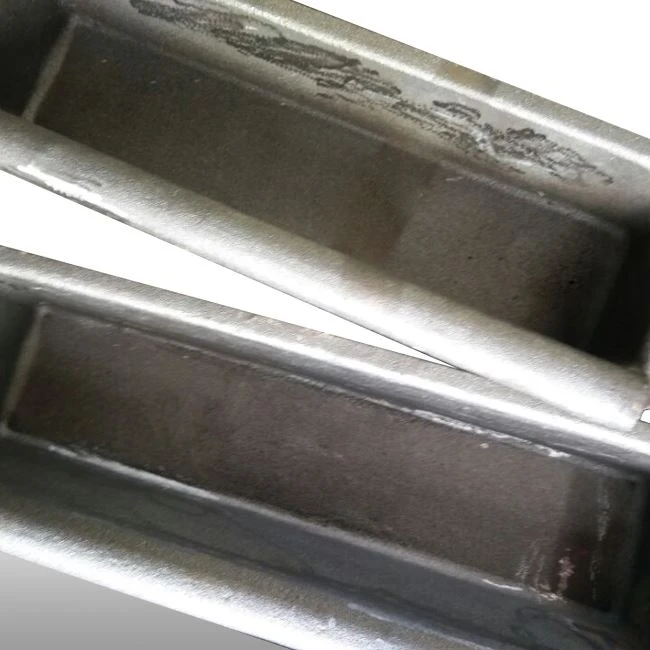
As a supplier of large cooling pans, we also offer a range of related products that complement our offerings. These products include Alloy Steel Ingot Sow Mould, Sow Molds with Multiple Chambers, and Aluminium Melting Dross Pans.
Alloy Steel Ingot Sow Moulds are used in the production of alloy steel ingots. These moulds are designed to withstand high temperatures and to provide a uniform cooling environment for the molten steel. The use of Alloy Steel Ingot Sow Moulds helps to ensure the quality and consistency of the alloy steel ingots.
Sow Molds with Multiple Chambers are used in the production of multiple ingots simultaneously. These moulds are designed to maximize the efficiency of the casting process by allowing multiple ingots to be cast in a single operation. The use of Sow Molds with Multiple Chambers can significantly increase productivity and reduce costs.
Aluminium Melting Dross Pans are used in the aluminum melting process to collect and remove the dross, which is a byproduct of the melting process. These pans are designed to withstand high temperatures and to provide a safe and efficient way to handle the dross. The use of Aluminium Melting Dross Pans helps to improve the quality of the aluminum and to reduce waste.
Conclusion
In conclusion, the heat distribution of large cooling pans is a complex and important topic. Understanding the science behind heat transfer and the factors that affect heat distribution in large cooling pans is crucial for ensuring optimal performance and achieving the desired results in various industrial applications.

As a supplier of large cooling pans and related products, we are committed to providing our customers with high-quality products and excellent service. If you have any questions about our products or would like to discuss your specific cooling needs, please don't hesitate to contact us. We look forward to working with you to find the best solution for your application.
References
- Incropera, F. P., & DeWitt, D. P. (2002). Fundamentals of heat and mass transfer. John Wiley & Sons.
- Holman, J. P. (2002). Heat transfer. McGraw-Hill.
- Cengel, Y. A., & Ghajar, A. J. (2015). Heat and mass transfer: fundamentals and applications. McGraw-Hill Education.