

As a supplier of low profile sow moulds, I've witnessed firsthand the critical role that injection speed plays in the manufacturing process. In this blog, I'll delve into the effects of injection speed on low profile sow moulds, exploring how it impacts the quality, efficiency, and overall performance of these essential tools.
Understanding Low Profile Sow Moulds
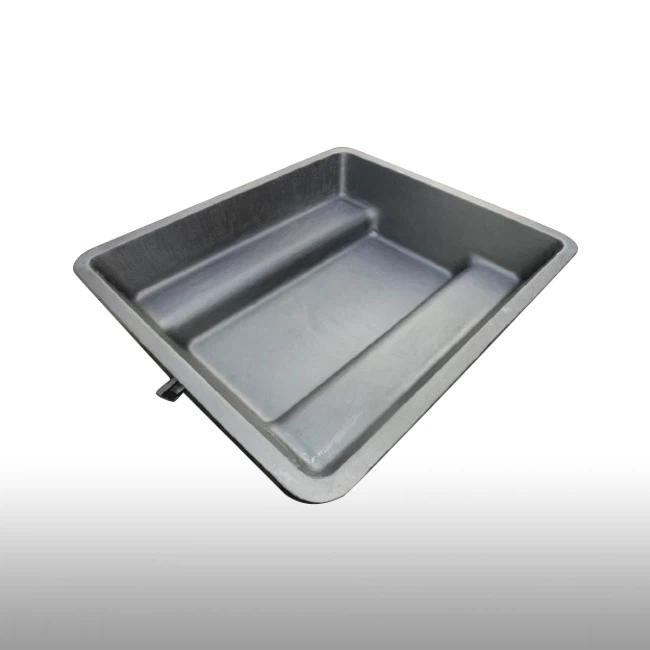
Before we dive into the effects of injection speed, let's briefly understand what low profile sow moulds are. These moulds are used in the aluminum production industry to cast large ingots known as sows. Low profile sow moulds are designed with a lower height compared to high profile ones, which can offer several advantages such as better heat dissipation and easier handling. They are commonly used in continuous casting operations where molten aluminum is poured into the moulds to form solid sows.
The Role of Injection Speed
Injection speed refers to the rate at which molten aluminum is introduced into the low profile sow mould. This speed can have a profound impact on the final product in several ways:
1. Filling Pattern and Uniformity
The injection speed directly affects how the molten aluminum fills the mould. A proper injection speed ensures that the metal flows evenly throughout the mould cavity, filling all corners and sections without creating air pockets or voids. If the injection speed is too slow, the aluminum may start to solidify before fully filling the mould, leading to incomplete castings and defects. On the other hand, if the speed is too fast, it can cause turbulent flow, which may result in splashing, oxidation, and uneven distribution of the metal within the mould.
For example, in a well - controlled injection process, the molten aluminum enters the mould in a smooth, laminar flow. This laminar flow allows the metal to displace the air gradually, minimizing the risk of trapped air and ensuring a uniform filling pattern. This is crucial for producing high - quality sows with consistent density and dimensions.

2. Solidification Rate
The injection speed also influences the solidification rate of the molten aluminum in the mould. A higher injection speed can introduce more heat into the mould, which may slow down the solidification process. This can be beneficial in some cases as it allows the metal more time to flow and fill the mould completely. However, if the solidification is too slow, it can lead to grain growth and a coarser microstructure, which may reduce the mechanical properties of the final sow.
Conversely, a lower injection speed may result in a faster solidification rate. While this can lead to a finer microstructure and potentially better mechanical properties, it also increases the risk of incomplete filling if the metal solidifies before reaching all parts of the mould.
3. Surface Finish
The surface finish of the cast sow is another aspect affected by injection speed. A proper injection speed helps in achieving a smooth and defect - free surface. When the molten aluminum flows smoothly into the mould, it adheres well to the mould surface, creating a clean and uniform exterior. If the injection speed is incorrect, it can cause surface defects such as cold shuts, which are visible lines or gaps on the surface of the sow. Cold shuts occur when two streams of molten metal meet and fail to fuse properly.
4. Mould Wear
Injection speed can also impact the wear and tear of the low profile sow mould. A high - speed injection can subject the mould to greater forces and pressures as the molten metal rushes into the cavity. This can cause increased erosion and abrasion of the mould surface over time, reducing its lifespan and increasing the need for frequent maintenance or replacement. A more moderate injection speed can help to minimize these forces and extend the life of the mould.
Optimizing Injection Speed
To achieve the best results, it's essential to optimize the injection speed for low profile sow moulds. This requires a combination of experience, experimentation, and the use of advanced monitoring and control systems.
One approach is to conduct trial runs with different injection speeds and analyze the resulting castings. By measuring the dimensions, mechanical properties, and surface finish of the sows, we can determine the optimal injection speed for a particular mould design and aluminum alloy. Additionally, modern casting equipment often comes with sensors and control systems that can monitor the injection process in real - time and adjust the speed as needed.
Another factor to consider is the temperature of the molten aluminum and the mould. The viscosity of the molten metal changes with temperature, which in turn affects the flow characteristics. Therefore, maintaining the proper temperature range is crucial for ensuring that the chosen injection speed works effectively.
Our Offerings and Related Resources
At our company, we are committed to providing high - quality low profile sow moulds that are designed to perform optimally under different injection speeds. We understand the importance of precision and reliability in the aluminum casting process, and our moulds are manufactured using the latest technology and materials.
If you are interested in learning more about related products, you can visit the following links:
- Aluminum Dross Transport Equipment: This page provides information about equipment used in the aluminum production process for handling dross.
- 1200 Lbs/1500 Lbs/ 2000 Lbs High Profile Sow Moulds with Fork Pocket: Explore our range of high - profile sow moulds with fork pockets for easy handling.
- Aluminum Sow Mould Casting: Get detailed insights into the aluminum sow mould casting process.
Contact Us for Procurement
If you are in the market for low profile sow moulds or have any questions about injection speed and its effects on the casting process, we encourage you to reach out to us. Our team of experts is ready to assist you in selecting the right moulds for your specific needs and providing guidance on optimizing the injection speed for the best results. We look forward to the opportunity to work with you and contribute to the success of your aluminum production operations.
References
- Campbell, J. (2003). Castings. Butterworth - Heinemann.
- Flemings, M. C. (1974). Solidification Processing. McGraw - Hill.
- Samuel, F. H., & Samuel, A. M. (2008). Aluminum Alloys: Fabrication and Applications. ASM International.