

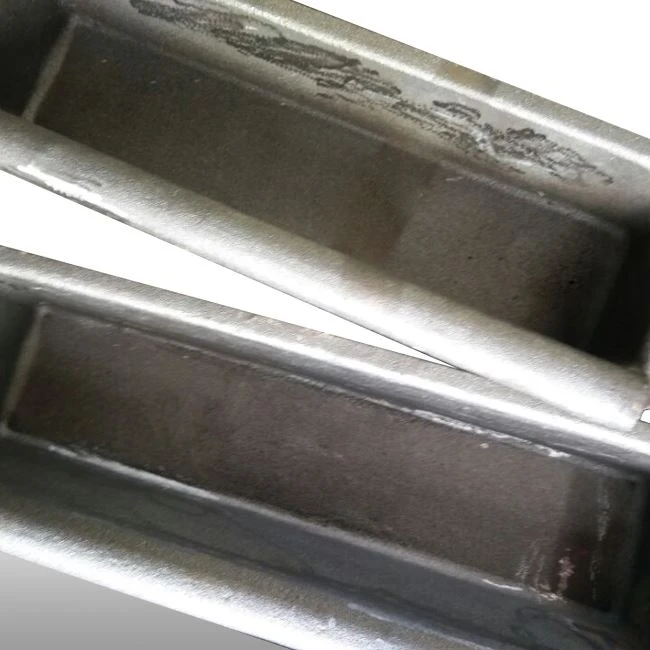
Alloy steel ingot sow moulds are essential components in the steelmaking and metal casting industries. These moulds play a crucial role in shaping and solidifying molten alloy steel into the desired ingot or sow shapes. As a reputable supplier of Alloy Steel Ingot Sow Mould, I am excited to share the detailed manufacturing process of these indispensable tools.
Material Selection
The first step in manufacturing an alloy steel ingot sow mould is the careful selection of materials. The material must possess high strength, good thermal conductivity, and excellent resistance to thermal shock and wear. Typically, high - quality alloy steels are chosen for this purpose. These alloy steels are composed of a combination of iron, carbon, and various alloying elements such as chromium, nickel, molybdenum, and vanadium. Each alloying element contributes specific properties to the steel. For example, chromium enhances corrosion resistance and hardness, while nickel improves toughness and ductility. Molybdenum increases the steel's strength at high temperatures, and vanadium refines the grain structure, resulting in better mechanical properties.
Melting and Refining
Once the appropriate materials are selected, they are loaded into a furnace for melting. Electric arc furnaces or induction furnaces are commonly used in this process. In an electric arc furnace, an electric arc is created between the electrodes and the metal charge, generating intense heat that melts the steel. Induction furnaces, on the other hand, use electromagnetic induction to heat and melt the metal.
During the melting process, the steel is continuously monitored and analyzed to ensure the correct chemical composition. Impurities such as sulfur, phosphorus, and non - metallic inclusions are removed through refining techniques. This can involve adding fluxes to the molten steel, which react with the impurities and float them to the surface, where they can be skimmed off. Oxygen blowing may also be employed to remove carbon and other unwanted elements.
Casting
After the molten steel has been refined to the desired quality, it is ready for casting. The casting process for alloy steel ingot sow moulds can be carried out using various methods, such as sand casting or investment casting.
In sand casting, a pattern of the desired mould shape is created. This pattern is usually made of wood, plastic, or metal. The pattern is then placed in a flask, and sand is packed around it to form a mould cavity. The molten steel is poured into the cavity, filling it and taking the shape of the pattern. Once the steel has solidified, the sand mould is broken away, and the rough - cast mould is removed.
Investment casting, also known as the lost - wax process, is a more precise method. A wax pattern of the mould is first created. The wax pattern is then coated with a ceramic shell by dipping it into a ceramic slurry multiple times and allowing it to dry. The wax is then melted out of the ceramic shell, leaving behind a cavity. The molten steel is poured into this cavity, and after solidification, the ceramic shell is removed.
Machining
After casting, the alloy steel ingot sow mould undergoes a series of machining operations to achieve the required dimensions, surface finish, and accuracy. Machining processes include turning, milling, drilling, and grinding.
Turning is used to shape the outer diameter of the mould, while milling is employed to create flat surfaces, slots, and other features. Drilling is used to create holes for various purposes, such as ventilation or the attachment of lifting devices. Grinding is the final machining operation, which provides a smooth surface finish to the mould, reducing friction during the casting process and ensuring the quality of the cast ingots or sows.
Heat Treatment
Heat treatment is a critical step in the manufacturing of alloy steel ingot sow moulds. It is used to improve the mechanical properties of the steel, such as hardness, toughness, and wear resistance. The heat treatment process typically consists of three main stages: heating, soaking, and cooling.
The mould is first heated to a specific temperature, which depends on the type of alloy steel and the desired properties. This temperature is maintained for a certain period, known as the soaking time, to allow the steel to reach a uniform temperature throughout. After soaking, the mould is cooled at a controlled rate. Different cooling rates can result in different microstructures and properties. For example, rapid cooling, such as quenching in oil or water, can increase the hardness of the steel, while slow cooling, such as annealing, can improve the toughness.
Surface Treatment
Surface treatment is applied to the alloy steel ingot sow mould to enhance its performance and durability. One common surface treatment is the application of a refractory coating. This coating provides a protective layer between the molten steel and the mould, reducing heat transfer, preventing sticking, and extending the service life of the mould.
Another surface treatment method is nitriding. Nitriding involves introducing nitrogen into the surface of the steel, forming a hard nitride layer. This layer improves the wear resistance and corrosion resistance of the mould, making it more suitable for repeated use in high - temperature and high - stress environments.
Quality Control
Throughout the manufacturing process, strict quality control measures are implemented to ensure that the alloy steel ingot sow moulds meet the highest standards. Non - destructive testing methods, such as ultrasonic testing, magnetic particle testing, and radiographic testing, are used to detect internal defects such as cracks, porosity, and inclusions.
Dimensional inspection is also carried out using precision measuring instruments such as calipers, micrometers, and coordinate measuring machines (CMMs). The surface finish is inspected using surface roughness testers to ensure that it meets the specified requirements. Chemical analysis is performed to verify the correct chemical composition of the steel.
Assembly and Packaging
Once the alloy steel ingot sow mould has passed all the quality control checks, it may undergo assembly if it consists of multiple parts. This can involve the installation of inserts, liners, or other components.
After assembly, the mould is carefully packaged to protect it during transportation and storage. Packaging materials such as wooden crates, plastic wraps, and foam inserts are used to prevent damage from impacts, moisture, and corrosion.
Conclusion
The manufacturing of alloy steel ingot sow moulds is a complex and precise process that requires expertise, advanced technology, and strict quality control. As a supplier of Alloy Steel Ingot Sow Mould, we are committed to providing high - quality products that meet the diverse needs of our customers in the steelmaking and metal casting industries. Our moulds are designed to offer excellent performance, long service life, and reliable operation.
If you are in the market for high - quality alloy steel ingot sow moulds, or if you have any questions about our products or the manufacturing process, we encourage you to contact us for a detailed discussion. We are also proud to offer related products such as Fast Cooling Dross Pans and Aluminum Recycling Dross Pan. Let's work together to meet your specific requirements and achieve your production goals.

References
- ASM Handbook Committee. (2008). ASM Handbook Volume 15: Casting. ASM International.
- Kalpakjian, S., & Schmid, S. R. (2010). Manufacturing Engineering and Technology. Pearson Prentice Hall.
- Totten, G. E., & MacKenzie, D. S. (2003). Steel Heat Treatment: Metallurgy and Technologies. CRC Press.