

In the realm of construction and mining, jaw crushers are indispensable workhorses. These machines are designed to break down large rocks into smaller, more manageable pieces, and their wear parts play a pivotal role in ensuring efficient and reliable operation. One of the most critical factors affecting the performance of jaw crusher wear parts is their hardness. As a leading supplier of Jaw Crusher Wear Parts, I've witnessed firsthand how hardness can make or break the functionality and longevity of these essential components.
Understanding the Concept of Hardness in Wear Parts
Hardness is a fundamental material property that refers to a material's resistance to local deformation, typically caused by abrasion, indentation, or penetration. In the context of jaw crusher wear parts, hardness is crucial because these parts are constantly subjected to high-stress impacts and abrasive forces as they crush rocks. The harder the wear part, the better it can withstand these forces without deforming or wearing down quickly.
There are several methods to measure hardness, with the most common being the Rockwell, Brinell, and Vickers scales. Each scale has its own testing method and is suitable for different types of materials and applications. For jaw crusher wear parts, the Rockwell scale is often used due to its simplicity and wide range of applicability.
Impact of Hardness on Abrasion Resistance
Abrasion is one of the primary causes of wear in jaw crusher parts. When rocks are crushed, they rub against the wear surfaces, gradually wearing them down. The hardness of the wear part directly affects its abrasion resistance. A harder wear part will have a lower rate of material removal under abrasive conditions compared to a softer one.
For example, a jaw plate made of a high-hardness alloy will be able to maintain its shape and surface integrity for a longer period when crushing abrasive rocks such as granite or quartzite. In contrast, a softer jaw plate may quickly develop grooves and pits, reducing its ability to crush rocks efficiently and increasing the risk of premature failure.

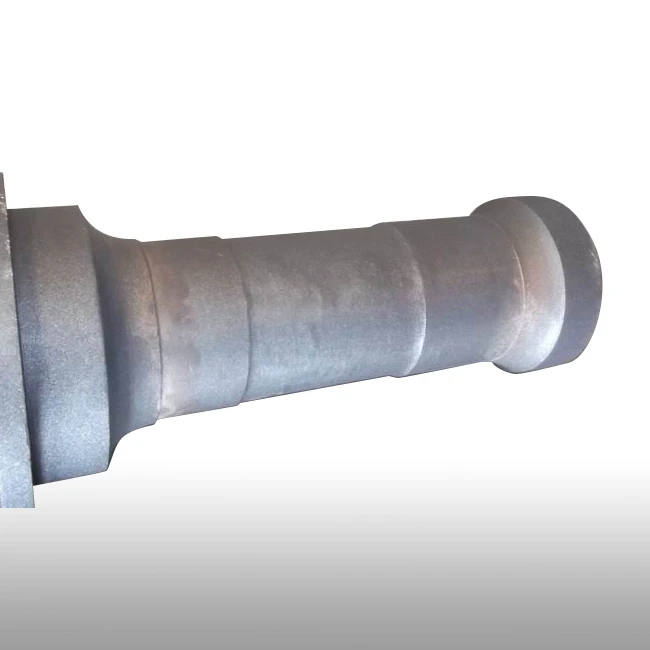
As a supplier, we offer a variety of jaw crusher wear parts with different hardness levels to meet the specific needs of our customers. Our Mining Crusher Parts Hammerhead are engineered to have optimal hardness for maximum abrasion resistance, ensuring a longer service life and lower replacement costs.
Influence of Hardness on Impact Resistance
While abrasion resistance is important, jaw crusher wear parts also need to withstand high-impact forces generated during the crushing process. When a large rock is fed into the crusher, it can create a significant impact on the wear parts. If the wear part is too hard, it may become brittle and prone to cracking or chipping under these impact loads.
On the other hand, if the wear part is too soft, it may deform plastically under impact, losing its shape and functionality. Therefore, finding the right balance between hardness and impact resistance is crucial. Our engineering team carefully selects the materials and heat treatment processes for our wear parts to achieve this balance.
For instance, our Cone Crusher Wear Parts are designed to have a hardness that provides sufficient abrasion resistance while also being tough enough to withstand high-impact forces. This ensures that they can perform reliably in demanding mining and construction environments.
Hardness and the Crushing Efficiency
The hardness of jaw crusher wear parts can also have a significant impact on the crushing efficiency of the machine. A well-designed wear part with the appropriate hardness can maintain a consistent crushing force and gap between the jaws, resulting in more uniform particle size distribution and higher throughput.
When the wear parts are too soft, they may deform over time, causing the crushing gap to widen or become uneven. This can lead to larger-than-desired particle sizes and reduced production capacity. Conversely, if the wear parts are too hard and brittle, they may break or chip, disrupting the crushing process and requiring frequent replacements.
Our Upper And Lower Frame For Cone Crusher are manufactured to have the right hardness to ensure optimal crushing performance. By maintaining a stable and precise crushing environment, these parts help our customers achieve higher productivity and better-quality end products.
Cost Considerations
In addition to performance, the hardness of jaw crusher wear parts also has cost implications. Harder materials generally cost more to produce due to the higher quality of raw materials and more complex manufacturing processes. However, they also tend to have a longer service life, which can result in lower overall costs in the long run.
As a supplier, we understand the importance of cost-effectiveness for our customers. That's why we offer a range of wear parts with different hardness levels and price points. Our customers can choose the parts that best suit their budget and operational requirements. Whether they need a high-hardness, long-lasting solution for a high-volume mining operation or a more cost-effective option for a smaller construction project, we have the right product for them.
Conclusion
The hardness of jaw crusher wear parts is a critical factor that significantly impacts their performance, including abrasion resistance, impact resistance, crushing efficiency, and cost. As a supplier of Jaw Crusher Wear Parts, we are committed to providing our customers with high-quality products that are engineered to have the optimal hardness for their specific applications.
If you are in the market for jaw crusher wear parts or have any questions about how hardness affects performance, we invite you to contact us for a detailed discussion. Our team of experts is ready to assist you in selecting the right parts for your needs and helping you optimize the performance of your jaw crushers.
References
- ASTM International. (2018). Standard Test Methods for Rockwell Hardness and Rockwell Superficial Hardness of Metallic Materials. ASTM E18-18.
- Callister, W. D., & Rethwisch, D. G. (2016). Materials Science and Engineering: An Introduction. Wiley.
- Kalpakjian, S., & Schmid, S. R. (2014). Manufacturing Engineering and Technology. Pearson.