

When it comes to operating an impact crusher, one of the key aspects that significantly affects the overall cost of production is the wear and tear of its parts. As a supplier of Impact Crusher Wear Parts, I understand the importance of calculating the cost - effectiveness of different impact crusher wear parts. This knowledge not only helps operators to optimize their crusher's performance but also enables them to make informed decisions about part replacements.
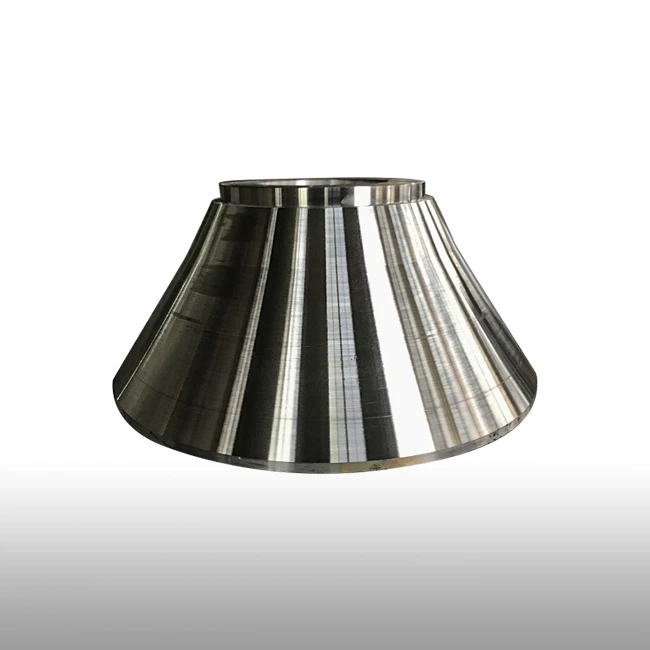

Understanding Impact Crusher Wear Parts
Impact crushers are designed to break large rocks into smaller pieces by using the force of impact. The wear parts in these crushers are subjected to extreme stress and abrasion, which can lead to significant wear over time. Common wear parts in an impact crusher include blow bars, aprons, and liners. Each of these parts plays a crucial role in the crushing process, and their performance directly impacts the crusher's efficiency and productivity.
Crusher Spare Parts are available in a wide range of materials and designs, each with its own set of advantages and disadvantages. For example, blow bars made from high - chromium alloy are known for their excellent wear resistance, but they can be relatively expensive. On the other hand, blow bars made from manganese steel are more affordable but may have a shorter lifespan in high - abrasion applications.
Factors Affecting the Cost - Effectiveness of Wear Parts
1. Initial Cost
The initial cost of the wear parts is often the first factor that operators consider. It is important to note that a lower initial cost does not always mean better cost - effectiveness. Cheaper parts may need to be replaced more frequently, leading to higher long - term costs. For instance, if a set of low - cost blow bars needs to be replaced every month, while a more expensive set can last for three months, the latter may be more cost - effective in the long run.
2. Wear Resistance
Wear resistance is a critical factor in determining the cost - effectiveness of wear parts. Parts with high wear resistance can withstand the abrasive forces in the crusher for a longer period, reducing the frequency of replacements. This not only saves on the cost of new parts but also minimizes downtime for maintenance and replacement. For example, Impact Crusher Wear Parts made from advanced materials such as ceramic - reinforced alloys can offer significantly better wear resistance compared to traditional materials.
3. Crushing Efficiency
The design and quality of the wear parts can also affect the crushing efficiency of the impact crusher. Well - designed parts can ensure a more uniform crushing process, resulting in higher production rates and better - quality end products. For example, blow bars with an optimized shape can improve the impact force and reduce the energy consumption of the crusher. This means that even if the initial cost of these parts is higher, the increased efficiency can lead to cost savings in the long term.
4. Compatibility
It is essential to ensure that the wear parts are compatible with the specific model of the impact crusher. Incompatible parts may not fit properly, leading to reduced performance and increased wear. This can result in higher costs due to frequent replacements and potential damage to the crusher. As a supplier, I always recommend customers to choose Crusher Spare Parts that are specifically designed for their crushers.
Calculating the Cost - Effectiveness of Wear Parts
To calculate the cost - effectiveness of different impact crusher wear parts, we can use the following formula:
Cost - effectiveness = (Total production during the part's lifespan) / (Total cost of the part and associated maintenance)
Let's break down the steps to calculate this:
Step 1: Determine the Lifespan of the Wear Part
The lifespan of a wear part can be estimated based on historical data, manufacturer's specifications, or field tests. For example, if a set of blow bars has been used in a similar crusher under similar operating conditions and has lasted for 500 hours, this can be used as an estimate for the lifespan.
Step 2: Calculate the Total Production during the Part's Lifespan
The total production during the part's lifespan can be measured in terms of the amount of material crushed. This can be determined by monitoring the crusher's production rate and multiplying it by the lifespan of the part. For example, if the crusher has a production rate of 100 tons per hour and the blow bars last for 500 hours, the total production during the part's lifespan is 50,000 tons.
Step 3: Calculate the Total Cost of the Part and Associated Maintenance
The total cost includes the initial cost of the wear part, the cost of installation, and the cost of any maintenance or repairs during its lifespan. For example, if a set of blow bars costs $1000, the installation cost is $200, and there are no major maintenance costs during its 500 - hour lifespan, the total cost is $1200.
Step 4: Calculate the Cost - Effectiveness
Using the formula mentioned above, the cost - effectiveness of the blow bars in the example is 50,000 tons / $1200 = 41.67 tons per dollar.
By calculating the cost - effectiveness of different wear parts, operators can compare them and choose the ones that offer the best value for money.
Case Study: Comparing Different Wear Parts
Let's consider a case where an operator is comparing two types of blow bars for their impact crusher.
Blow Bar A:
- Initial cost: $800
- Lifespan: 300 hours
- Production rate during lifespan: 80 tons per hour
- Installation cost: $150
- Maintenance cost during lifespan: $100
The total production during the lifespan of Blow Bar A is 80 tons per hour * 300 hours = 24,000 tons.
The total cost is $800 + $150+ $100 = $1050.
The cost - effectiveness of Blow Bar A is 24,000 tons / $1050 = 22.86 tons per dollar.
Blow Bar B:
- Initial cost: $1200
- Lifespan: 500 hours
- Production rate during lifespan: 100 tons per hour
- Installation cost: $200
- Maintenance cost during lifespan: $150
The total production during the lifespan of Blow Bar B is 100 tons per hour * 500 hours = 50,000 tons.
The total cost is $1200 + $200+ $150 = $1550.
The cost - effectiveness of Blow Bar B is 50,000 tons / $1550 = 32.26 tons per dollar.
In this case, although Blow Bar B has a higher initial cost, it is more cost - effective in the long run due to its longer lifespan and higher production rate.
Importance of Choosing the Right Wear Parts
Choosing the right Impact Crusher Wear Parts is crucial for the overall performance and profitability of the crushing operation. High - quality wear parts can improve the crusher's efficiency, reduce downtime, and lower the total cost of ownership. In addition to the factors mentioned above, it is also important to consider the reputation of the supplier. A reliable supplier can provide high - quality parts, technical support, and timely delivery.
Conclusion
Calculating the cost - effectiveness of different impact crusher wear parts is a complex but essential process for operators. By considering factors such as initial cost, wear resistance, crushing efficiency, and compatibility, and using the cost - effectiveness formula, operators can make informed decisions about part replacements. As a supplier of Impact Crusher Wear Parts, I am committed to providing high - quality parts and helping our customers optimize their crusher's performance. If you are interested in learning more about our products or need assistance in calculating the cost - effectiveness of wear parts for your crusher, please feel free to reach out for procurement discussions.
References
- "Crushing Equipment Handbook" by Mineral Processing Society
- Manufacturer's specifications of various impact crusher wear parts